On getting fired

On Capital Mind, Deepak Shenoy has a great post out on the TCS layoffs. TL;DR: TCS could have handled it better, but getting fired is a part of corporate life. And 3 months’ severance is generous. He also adds that we should hedge – build your brand, build savings, build skills so that getting fired won’t hit you so hard.

An argument that is being bandied about in relation to the TCS layoffs that if you need job mobility, then job insecurity is a related price you have to pay. For example, check out these tweets from Raj:

So the basic argument here (which I completely agree with) is that you can’t have one-way optionality. A generation ago, there was almost no optionality. You couldn’t get sacked, and it was very difficult for you to leave. That was the way the world worked back then.

Soon, the economy expanded, and you started seeing mobility. You started seeing optionality – the job was a one-way option. You could choose when you wanted to leave, but given the high growth and general shortage of skilled talent back in the days, companies couldn’t sack you. That sweet spot existed for a short while.

In the last decade or so, though, this has started changing. Companies realised that keeping deadwood on the books is a lot more expensive than their financial cost-to-company. A “no firing” policy sends out the wrong incentives – people without motivation are more likely to stick around than the ambitious. And that can never be good for the company. So now companies want optionality both ways. And as the TCS episode illustrates, people are not liking that the optionality exists both ways now. It seems like they were used to the one-way optionality street that existed for a short while during the rapid expansion of the IT sector.

The problem with the above argument (encapsulated in Raj’s tweets, which I agree with), however, is that it assumes that employees have a choice. When you say that “if you want mobility, you get insecurity as part of the package”, the subliminal message is that it there exist jobs where you can choose to forego your mobility in order to save yourself from insecurity. Unfortunately not too many such jobs exist. And it is a matter of liquidity.

Yes, there still exist plenty of jobs where there is strong two-way commitment. However, they are nowhere as numerous as jobs where there exist two-way optionality. The simple matter is that the “market has moved”. Most people are comfortable with the “latest” arrangement, where you can leave easily but also get sacked easily. Given that most people are comfortable with this arrangement, companies are also comfortable with this and have moved to this arrangement. And that has led to a virtuous cycle and the number of companies and number of people who like this arrangement have hit a critical mass.

In other words, if you want an “optionless” job, that is like living in the world until yesterday. But it is not enough that you want to live in that world. The world as we know it is social, and for us to live a certain way, we need other people to agree to live the same way. In other words, we can’t live our chosen lifestyle in isolation without counterparties living that way too.  And when most employers have moved on from the optionless regime to the two-way optionality regime, even if you want to live in yesterday’s world, there aren’t too many companies that still live that way. So you don’t have a choice!

So you need to learn to adapt to live and thrive in the new regime. And it is not that this regime will last forever. I’m sure people will innovate and other regimes might supersede this regime. Some people are slow to react to change, but liquidity makes the world ruthless, and punishes you badly for not adapting. That is the hard truth that some of these people who are cribbing about getting fired from TCS need to digest.
Asset Pricing is back

I haven’t had too much luck with MOOCs. Usually I end up signing up for a lot of them and then subsequent NED happens with the effect that I end up doing nothing about the course and I “drop out”. The number of courses I’ve dropped out of is not even funny.

There has been only one MOOC that sustained my interest for a reasonable length of time, though, the course of Asset Pricing taken by The Grumpy Economist. For five weeks in September-October 2013, I diligently did all the readings and assignments and quizzes. I remember returning from a day trip one Sunday, and late that night, sitting down to do my assignments for they were due the next morning. But then the complexity of the course increased precisely at the same time when my work pressures went up, and I missed an assignment. Soon, that led to NED and I dropped out of the course.

I had enjoyed the course so much that I decided that I would take it the next time it was offered and actually complete it. To my disappointment it wasn’t offered in October 2014. I assumed that the economist had gotten too Grumpy and decided to stop offering the MOOC. I was disappointed.

But then this morning I see a mail from Coursera indicating that the course is back, in two parts this time. I’m in the process of signing up for the first part of Asset Pricing. You should do so, too, if you are so inclined. The breadth covered in the course is phenomenal, and what really excited me is how concepts that I had learnt in three or four different courses when I was a student at IIMB all got integrated into one course here. As I had written back then,

The beauty of the Chicago course is that it is holistic, and so well connected. The same professor, in the same course, teaches us diffusions while in another lecture uses the marginal utility theory from economics to explain the concept of interest rates. In an assignment he has got us to do regressions and in some others we do stochastic calculus. Having seen each of these concepts separately, I’m absolutely enjoying all the connections, and that is perhaps helping me keep my interest in the course.

The effect of fall in petroleum prices

As I was driving away after having filled petrol in my car, I was wondering about the steep drop in petrol prices. Not so long ago, you would get only about 12 litres for Rs. 1000 in Bangalore. Today I paid the same amount and got close to 15 litres – almost a fourth more than what I used to get not so long ago!

I started thinking of the economic impact of the fall in petroleum prices. The obvious effect is the direct effect in that products for which petroleum is an input (this includes pretty much any good that is transported) see a fall in prices to the extent of the contribution of petroleum to their final prices. That, however, is only a small part of the impact on the economy.

The more important impact on the economy from the fall in petroleum prices is that it results in a drop in transaction costs (costs borne by buyer of a good/service which don’t accrue to the seller)! This is because transporting anything now has become a lot cheaper (by about 20%, which is significant), so goods and services that were not being traded earlier because of the transportation cost being prohibitive have a good chance of being traded now!

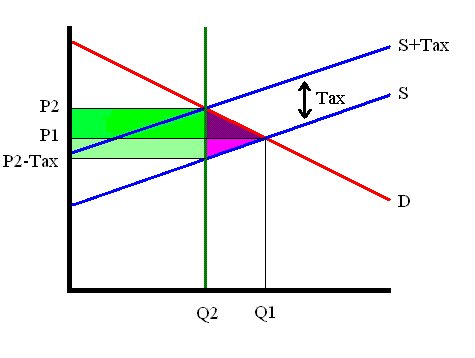
This graph shows the impact of transaction costs (tax is a special case) on the clearing price and quantity. Notice that a fall in transaction cost (mentioned as “tax” in the figure) leads to both increase in traded quantity as well as lower prices

The fall in transaction costs means that economic activity will increase, and given that the fall in transaction costs in this case is rather sharp (20% is no joke), the corresponding increase in economic activity should be significant! My personal take is that analysts are grossly underestimating the impact of falling petroleum prices on GDP growth in India.

Coffee pricing at Bangalore airport

I had what I thought was a neat theory on coffee pricing at the Bangalore International Airport. However, on second thoughts, I think the theory is bunk. On third thoughts, however, I think I should publish it, even though I don’t believe it is true. So here goes.

There are two places where you get great filter coffee outside the terminal of the Kempegowda International Airport near Bangalore. At the Western edge, close to the departure gates, there is Maiya’s, which also sells South Indian snacks and food items apart from pre-mixed filter coffee (without sugar). The coffee here is priced at Rs. 30 per cup. At the Eastern edge, close to the arrival gates, there is an outlet of Hatti Kaapi. Now, this outlet has started selling snacks, too, and now sells coffee in cups and pots of various sizes. However, the “basic” filter coffee, which is mixed fresh on the spot (you can choose the level of sweetness, and strength) and is available in a paper cup the same size of that at Maiya’s, is priced at Rs. 15.

The argument I had in mind for this differential pricing was that the clientele of Maiya’s, it being at the departure gate, is mostly passengers on their way to board flights. Given that they can afford to fly, they can afford to pay a premium for good coffee. Hence it is good economics to charge a high price for the coffee. Also, given that departing passengers are usually short on time, it is unlikely that they will pay the additional time cost of walking down to the Hatti Kaapi outlet in order to save the Rs. 15 per cup monetary cost of coffee there.

At the other end, Hatti Kaapi is at the arrival gate, and its major clientele consists of drivers. Given the distance of the airport from Bangalore city, it has become almost unheard of for relatives and friends to go all the way to the airport to pick up people. So people waiting at the arrival gate are mostly drivers. And given that drivers are not particularly rich (not rich on an average as airline travellers at least), they are much more price-sensitive when it comes to their coffee. And so the coffee at this end of the airport is priced at a much more reasonable Rs. 15 per cup. This makes for a nice economic theory, right?

The theory falls apart, however, if you compare the prices at Maiya and Hatti kaapi outlets at the airport to their prices elsewhere in the city. A good parallel is in Jayanagar, where the same two establishments have outlets across the road from each other (intersection of 7th Main and 30th Cross).

The kind of service in the two establishments is similar. You stand in line, take a token and stand in line again to get your cup of coffee. Hatti serves its coffee in a paper cup while Maiya serves in a ceramic cup-and-saucer. Like at the airport, Hatti’s kaapi is mixed on the spot and you can set your sugar level. Unlike at the airport, Maiya also mixes coffee fresh on the spot, but like at the airport no sugar is added and you need to add it yourself. It must be mentioned here that the Maiya in question has been there for several years while the Hatti outlet across the road started only a few months back.

And how do Maiya and Hatti price their coffee in Jayanagar? Maiya is at Rs. 18 per cup, and Hatti at Rs. 10 per cup. So the ratio of prices of a cup of coffee between Maiya and Hatti at the airport (2:1) is not very different from the ratio of prices of a cup of coffee between Maiya and Hatti in the city (1.8:1). So the theory I mentioned above falls flat on its head.

Where the theory stands, perhaps, is in explaining why Maiya and Hatti are located at the airport at the ends where they are located – Maiya being a more premium brand in general captures the passenger crowd at the departure gate, while Hatti being a more price-sensitive brand captures the driver crowd at the arrival gate.

And regarding the coffee itself I’ve had coffee at all four outlets and can confirm that both in the city and the airport, the quality of Maiya’s coffee is much superior to Hatti’s. In fact in Jayanagar, where the two outlets are a 5-minute walk from where I live, I prefer to pay the price and time (the lines at Maiya are generally longer than at Hatti) premium to drink coffee at Maiya rather than to drink the more “reasonably priced” stuff at Hatti.

Grassroots of middle fingers

Note: This post is being written immediately after a trip to Kolkata, where I was greeted by the photo of Mamta Banerjee pretty much everywhere in the city. When I first saw those photos on Thursday night, I thought I’ll liken them to the photos and cutouts of Mahinda Rajapaksa that I saw all over Colombo on my visits there in 2010 and 2014, but then yesterday’s election result perhaps makes that comparison moot. 

There is a special relationship between Mamta Banerjee’s Trinamool Congress and the middle finger. First, almost a decade back, quizmaster Derek O’Brien, who is now a Rajya Sabha member and a spokesperson for the Trinamool congress, held up his middle finger in the middle of Landmark Quiz, Bangalore, in response to some negative feedback from bloggers following his handling of the same quiz in Chennai earlier that year.

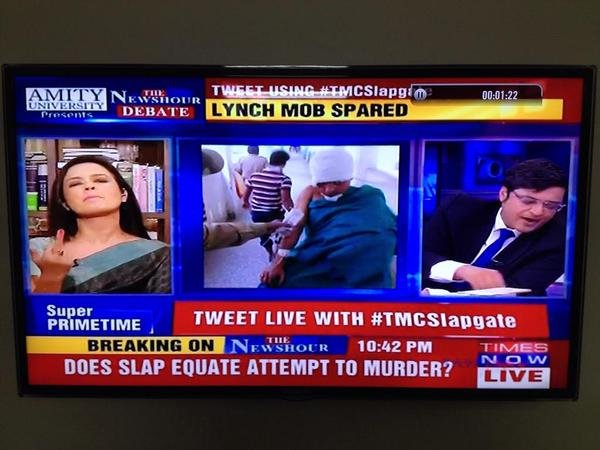
Now, another spokesperson of the same party, Mohua Moitra, has shown that she is not one to be left behind. On Arnab Goswami’s Newshour show last week, she held up her middle finger. And I must say that this is one level better than Derek, for while Derek used his middle finger on a bunch of hapless unsuspecting quizzers, Mohua used hers on Arnab, the greater news anchor of them all, and on prime time television.

Considering that the Trinamool Congress is a breakaway of the Indian National Congress (the name gives it away), it is appropriate that the party chooses an election symbol that reflects that it was one part of the INC’s “Hand”. Considering its spokespeople’s fondness of display of this body part, may I humbly suggest that the Trinamool Congress adopt the “middle finger” as its party symbol? The flower-and-grass symbol the party currently uses seems too tame for it!


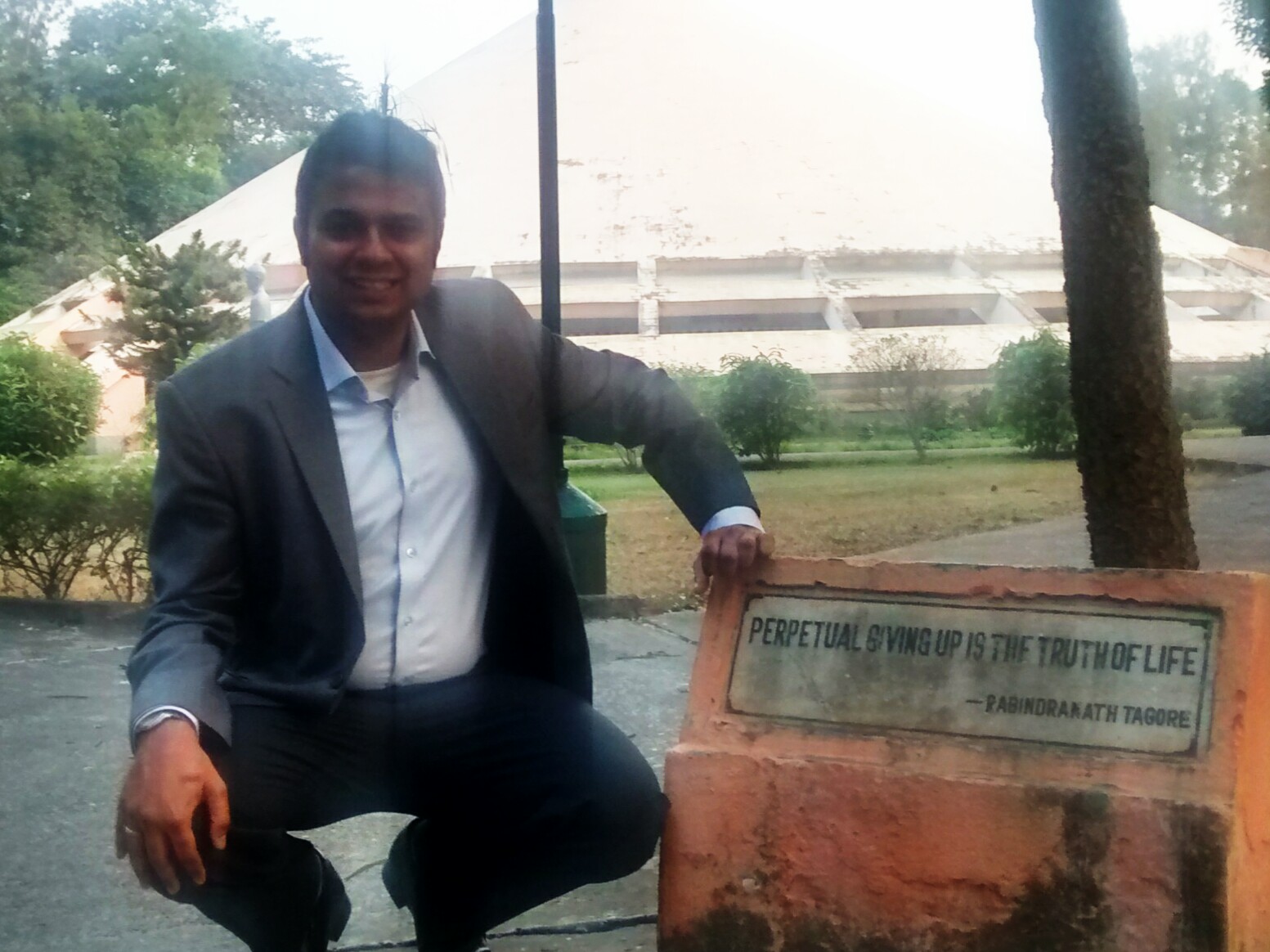
Perpetual giving up is the truth of life

That’s my biggest takeaway from my trip to Calcutta, which is where I’m writing this blog post, sitting in back of a car. On my way back to the airport having delivered a lecture on “the role of data and scientific temper in democracy” at the “management centre for human values” at IIM Calcutta.

image

Talk went off okay. I’d assumed an audience of mostly MBA students but turned out there were mostly professors and grad students. It’s possible that my lecture was a bit too laddoo.

This was my second time in the city, and I was here after a gap of nine years. Both trips were rushed. Both trips were to IIM. In fact on both trips my point of business was the same hall!

This time I was put up at the campus guest house. It’s a rather ancient building but well maintained. The staff were also extremely nice – like for example when I got there at 10pm last night they had saved dinner for me though the dining hall had closed. And this morning I was woken up by the loud ringing of my room doorbell and presented with a flask of easily the best tea I’ve had in a very very long time.

The city is a bit surreal though. Both on my way to IIM last night and on my way back to the airport today the roads have been funny. You travel on wide roads for a while and then it suddenly gets narrow. The next moment the driver has sneaked into some tiny residential gully!! And at times the road is extremely wide. So wide that the shops are all very far away.

On my way back to the airport now I realised that it helps knowing people from the city you’re visiting. I messaged Manasi asking for places I can get good sweets. She called and spoke to the driver and he takes me to this little sweet shop near the rather hilariously named “mahanayak Uttam kumar” metro station. There was no pace to park so I hurriedly gorged down radhaballabi, jaggery chum chum and jaggery Sandesh. All very good stuff.

I need to make another trip to this city sometime. If only for the sweets and snacks and tea! And for perpetually giving up in life.

Bangalore airport has become horrible

image

Flying domestic after a really long time. The last time I did was back in august. And the Bangalore airport seems to have become horrible in the meantime.

Check out the picture. Gates so close together and hardly any seats for passengers to wait on. Now it’s well known that most domestic flights have 150-180 seats. How hard is it to design waiting areas to seat so many people per flight?

And the Bangalore airport has just been expanded and it’s so congested. Talk about continuing to underestimate growth!

The only hope is that this is a temporary arrangement and once the expansion is complete we’ll have better waiting space.

Inefficiencies in the auto rickshaw market and Uber

Taxi marketplaces such as Uber and Ola address inefficiencies and failures in the auto rickshaw / taxi market

Weary after a long cold night journey you get off the overnight bus from Chennai at Lalbagh’s Double Road gate, and look around for auto rickshaws. There are some ten of them around. The drivers are equally weary, having woken up early and left their homes to stand in the cold, hoping to find passengers alighting from buses. They want to get compensated for this, and quote you a fare that includes such compensation. All of them quote similar fares. You grudgingly bargain and agree, and conclude that Bangalore’s auto drivers are bastards.

Alternate scenario: as the bus reached Madivala, ten minutes away from Lalbagh Double Road gate at that time of the morning, you pull out your app and ask for a taxi to pick you up from Double Road gate in ten minutes’ time. The driver has been up, but resting at home. He leaves home now, just in time to be there at Double Road gate by the time you get off there. Off you get into the car and go.

You have to get to work and try catching an auto rickshaw. The guy asks for extra money for he has to take you through traffic-laden roads, which are a tax on his time, which the regulated fare doesn’t compensate him for. You bargain, get in, and conclude that auto drivers are bastards.

In an alternate scenario, you use an app-based taxi which calculates the fare as a linear combination of distance travelled and time taken, which means that the driver gets compensated for getting stuck in traffic without having to bargain for it. And without you having to think that the driver is a bastard.

In the evening you are trying to get an auto rickshaw from MG Road, and the guy asks for a premium. This premium is not reflective of costs, but the fact that demand for auto rickshaws in that area at that time is high, and that there will be customers willing to pay that premium. You conclude that the auto rickshaw driver is a bastard. Uber’s surge pricing (which can be steep at times) doesn’t evoke the same reaction from you. Uber has centralised knowledge of demand and supply so they can clear prices better, while the auto driver, lacking that knowledge, quotes a price that reflects his lack of market knowledge. And not having a good idea of what to charge, he might try to charge above market price.

What I’m trying to say here is that the local taxi/auto rickshaw market is inefficient, and ridden with failures. There is lack of information flow between demand and supply, which leads to inferior price negotiation, and the transaction cost of time and effort wasted on negotiation as opposed to using that time to travel! And when a market fails, the classic economic response is regulation, but in the case of taxi markets regulation is so poor (regulated prices do not reflect costs) that it enhances the market failure. The (badly) regulated prices anchor into people’s minds unrealistic expectations, and when auto drivers nudge them towards more realistic market prices, passengers assume that they (drivers) are bastards.

It is in this context that players like Uber and Ola (I’m not a fan of Ola’s pricing model, though) step in and try to resolve the market failure by improving flow of demand-supply information and setting “clearing prices” that compensate the driver in line with his costs. If you look closely, these companies are actually rescuing the local taxi market from its inherent inefficiencies and failures and bad regulation!

It is important, however, that no one market place ends up becoming a monopoly. As long as we have two or three different marketplaces, both customers and drivers have the choice of moving between one and the other, and this will ensure that these market places face market pressures from the two sides of the market, and if they “regulate” in an unfair manner, their participants will move to a competing marketplace, resulting in loss of business for the marketplace.

But then, considering the inherent network effects of the marketplace model, I don’t know how we can ensure that competition exists!


Why Bharadwajs are so numerous

This morning I was at the faculty lounge at IIMB, drinking coffee and conversing with a few professors. Soon, the discussion moved to Bharadwaj gotra and related stuff. And something a professor (who is a Bharadwaj) said explained very well as to why the gotra is so prolific.

So he said that the Bharadwaj ashram was quite well known in its ancient times for the quality of its food. Another professor related an anecdote about how Rama, on his flight back from Lanka made a detour to eat at the Bharadwaj ashram, even as his subjects back in Ayodhya were waiting fervently for him. Food at the Bharadwaj ashram was so good, he said.

Now there are two ways in which this explains why Bharadwajs are so numerous. Firstly, the quality of the food in the ashram meant that Bharadwaj’s children and grandchildren and other descendants were all very well fed. Now, considering that these were times much before the industrial revolution and there was generally a shortage of food, this meant that infant and child mortality rates were generally high. But not in the Bharadwaj ashram, thanks to the food there!

So that meant that the Bharadwajs grew up fitter and healthier than descendants of other rishis, and thus lived longer and were able to procreate more. The bullwhip effect caused due to enhanced longevity and fitness of the early Bharadwajs has resulted in the proliferation of Bharadwajs today.

The other explanation is that the superior quality of food at the Bharadwaj ashram attracted more people into the ashram, and these people would yearn to become part of the “family” (I’ll spare you the gory details here). That meant that Bharadwaj and his immediate male descendants had much more access to furthering their lineage compared to competing gotras. And hence you have so many Bharadwajs today.

In fact we might have had several more Bharadwajs but for the fact that the gotra system is designed such that no one gotra ever gets to big. That two people from the same gotra are not allowed to marry each other naturally keeps the size of a particular gotra in check.

Let’s say for example that more than half the Brahmins were Bharadwajs. Considering that a Bharadwaj can only marry a non-Bharadwaj, that would leave a number of Bharadwajs being unable to marry, which means that the number of Bharadwajs in the next generation would be lower!

It is interesting, though, that everything can be explained through food!

Deranging groups

Ok so this is a mathematical problem. I plan to give three group assignments to my IIMB class. Let’s assume that there are 60 kids and for each assignment I want them to form groups of four members each. For the first assignment I’ve let them form the groups themselves.

For the second assignment, though, I want to create a “derangement” of these groups – in the sense that I want to form a different set of 15 groups of 4 members each such that no pair of students who are in the same group for assignment 1 will be in the same group for assignment 2. And I’m looking for an algorithm to thus “derange” my students. And whether it is possible at all to derange students thus.

My inclination is that this might have a solution in graph theory – in terms of graph colouring or something? Take the students from the first group and join every pair of students that are in the same group with an edge. Then colour the nodes of the graph. Pick nodes of the same colour (these are students that haven’t been in groups together) and randomly assign them to new groups. Repeat for all colours.

Question is how many colours we need to colour the graph. If it’s planar, we’ll need only 4 colours! And considering that the first assignment has 4 students per group, the maximum degree of a node is 3. If the maximum degree of an edge is 3, does that say anything about the planarity of the graph? If I derange the students once for assignment 2, can I do it again for assignment 3 (now each node has a degree of 6!) ? How do I think about this mathematically? Can you help?