The problem with Indian agriculture, and government

The problem with the Indian agriculture sector is that the government takes a very “cash view” of the sector while what is required is a “derivative view”. 

So Congress VP Rahul Gandhi railed on in a rally about how the current Narendra Modi government is anti-farmer, and pointed out at the land acquisition amendment bill and the lack of raising of “minimum support price” as key points of failure. Gandhi was joined at the rally by a large number of farmers, who reports say were primarily very pissed off about the failure of their rabi crops thanks to unseasonal rains in the last month and a bit.

If the government were to take Gandhi’s criticism seriously, what are they expected to do? Not amend the land acquisition act, or amend it in a different way? Perhaps, and we will not address that in this post, since it is “out of syllabus”. Increase the Minimum Support Price (MSP)? They might do that, but it will do nothing to solve the problem.

As I had pointed out in this post written after a field trip to a farm, what policymakers need understand is that farming is fundamentally a business, and like any other business, there is risk. In fact, given the number of sources of uncertainty that exist, it can be argued that farming is a much riskier business than a lot of other “conventional” businesses.

So there is the risk of high prices of inputs, there is risk of bad weather, there is risk of a glut in supply that leads to low prices, there is a risk that the crop wasn’t harvested at the right time, there is a risk that elephants trampled the field, or there is a risk that there might be a new strain of bugs that might destroy the crops. And so forth. And given that most farmers in India are “small”, with limited land holdings, it needs to be kept in mind that they don’t have diversification as a (otherwise rather straightforward) tool to mitigate their risks.

And when the farmers face so many risks, what does the government do? Help them mitigate at max one or two of it. One of them is the “minimum support price” which is basically a put option written by the government, for free, in favour of the farmers. All it entails is that the farmer  is assured of a minimum price for his wares if market prices are too low at the time of harvest. In other words, it helps the farmer hedge against price risk.

What other interventions do Indian governments do in farming? There are straightforward subsidies, all of the input variety. So farmers get subsidised seeds, subsidised fertilisers, subsidised (or in several cases, free) electricity, occasional subsidies in irrigation, subsidised loans (“priority sector lending” rules), and occasionally, when shit hits the fan, a loan waiver.

Barring the last one, it is easy to see that the rest are all essentially input subsidies, making it cheaper for the farmer to produce his produce (I’m proud of that figure of speech here, and I don’t know what it’s called in English). Even loan waivers, while they happen when market conditions are really bad, are usually arbitrary political decisions, and never targeted, meaning that there are always significant errors, of both omission and commission.

So if you ask the question of whether the government, through all these interventions, make the business of farming easier, it should be clear that an answer is no, for while it makes inputs cheaper and helps farmers hedge against price risk, it doesn’t help at all in mitigation of any other risks. Instead, what the government is essentially doing is by paying the farmers a premium (subsidised inputs, free options) and expecting them to take care of the risks by themselves. In other words, small “poor” farmers, who are least capable of handling and managing risk, are the ones who are handling the risk, and at best the government is just providing them a premium!

The current government has done well so far in terms of recognising risk management as a tool for overall wellbeing. For example, the Jan Dhan Yojana accounts (low-cost bank accounts for the hitherto unbanked) come inbuilt with a (albeit small) life insurance cover. In his budget speech earlier this year, the Finance Minister mentioned a plan to introduce universal insurance against accidental death. Now it is time the government recognises the merits of this policy, and extends it to other sectors, notably agriculture.

What we need is a move away from “one delta” cash subsidies and a move towards better risk management. The current agricultural policies of successive governments basically ensure that the farmer makes more when times are good (lower inputs costs, free put options (MSP) with high strike price), and makes nothing when times are bad. Rudimentary utility theory teaches us that the value of a rupee when times are good is much lower than the value of a rupee when times are bad. And for the government, it doesn’t really matter as to when it spends this money, since its economic cycle is largely uncorrelated with farmers’ economic cycles. So why waste money by spending it at a time of low marginal utility as opposed to spending it at a time of high marginal utility?

In other words, the government should move towards an institutionalised system of comprehensive crop insurance. Given the small landholdings, transaction costs of such insurance is going to be high, and the government should help develop this market by providing subsidies. And this subsidy can be easily funded – remember that the government is already paying some sort of a premium to farmers so that they manage their own risk, and part of this can go towards helping farmers manage their risk better.

It is not going to be politically simple, for the opposition (like Rahul Gandhi) will rail that the government is taking money away from farmers. But with the right kind of messaging, and subsidies for insurance, it can be done.

Brainstorming

I was never a big fan of “brainstorming”. I’m referring to those meetings where everyone gets together and thinks aloud, in order to converge to a solution. In the past, when I’ve been involved in such exercises, they’ve mostly come to nothing, and mostly ended with a list of to-dos which got never done (this was mostly in a corporate context). As a consequence, I started hating large meetings also (either most people wouldn’t add value or it would end up like a group discussion with everyone shouting), and have been trying to avoid them.

This time, though, it was different. The context was not corporate. The agenda did not involve an item of day to day work. None of us had a firm stand on the topic at the beginning of the meeting, with each of us having our own apprehensions of either stand (when people come with preconceived ideas and biases, there usually is nothing to storm our brains about).

And so we got together. And we talked. There were times when no one spoke. There were times when it actually turned out to be like a group discussion (I actually said, “ok I have ten points which I haven’t been able to make in the last one hour. I’ve written them down and let me shoot now”). But the situation never got out of hand. Mutual respect meant that cross-talk quickly died out, and we listened to each other. And it was extremely civil.

And then things started crystallising. Soon, some of us had an opinion. Later, others did. Some were ultimately not convinced, but had an opinion anyway. In a period of about twenty minutes somewhere in the third hour of the session, we all seemed to have an “aha moment” (apologies for that consultantspeak). But such moments occurred at different times for each of us.

And then we did the usual thing of “going round the table” for each of us to express our opinions. And then we did. And as each of us expressed our opinions, we discussed it further. Things crystallised better. And we ended the meeting asking everyone who was there to blog about it.

This is what I wrote:

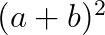
given that these two internets are independent, the total value is a^2 + b^2. Now, if we were to tear down the walls, and combine the two internets into one, what will be the total value? Now that we have one network of (a+b) users, the value of the network is (a+b)^2 or a^2 + 2 ab + b^2 . So what is the additional benefit that we can get by imposing net neutrality, which means that we will have one internet? 2 ab, of course!

This is what Nitin wrote:

If the government opens up the telecom service market to greater competition, perhaps by issuing unlimited licenses, then there is a case to allow them the freedom to discriminate among customers. As the state-owned carrier, BSNL can provide a neutral internet. However, if the government does not open the sector to further competition, therefore shielding the telecom service providers from more competition, then mandating net neutrality provides a reasonable approach to promoting the public interest.

Varun wrote this:

the regulator’s two major tasks are to enhance social welfare by protecting the consumer interest and to create an environment that is conducive for business — that will further enhance social welfare. A neutral internet will definitely benefit the consumers interest; but since the regulatory framework is not conducive for business, it appears that net-neutrality is in conflict with business interests. The situation can change if the regulatory framework is eased and the markets are opened up.

And Pranay wrote this:

net neutrality as a principle must be upheld. This is because communication network providers should not have the unfair advantage of being able to price internet content differently. Once the communication networks are setup, costs do not change with consumers accessing different content. In any case, the communication service providers are free to have fair internet usage policies to prevent induced demand effects

Gautam went down approximately the same path as me, and wrote this:

This is exactly why I oppose Zero Rating as well, whether paid or unpaid – it tends towards creating pockets of disconnected users per telecom company and while this is valuable for the telecom company and the applications and sites that are zero-rated, it reduces the total utility of the public internet, as a whole.

Devika deviated a bit from the crowd. This is what she said:

That said, it does not mean that ISPs should be restricted from entering into contracts with content providers. If Flipkart wants to undertake a joint marketing initiative with Bharti Airtel, it should be allowed to so. For example, Flipkart can give benefits to Airtel from sharing their customer base. To be extremely clear, such collaborations should not hinder access to any other internet sites. This will maintain a level playing field for all content providers.

Anupam, too, differed, and argued that customers need to be given choice:

If a person runs his business solely based on international VoIP calls and doesn’t mind paying extra for ensuring reliability and speed, he should be able to access that privilege. Or, for that matter, a Facebook or Twitter addict who wants these apps to be quick such that they can post real time selfies, should be able to choose these apps over say, apps which give real time updates on political happening in Nicaragua. Thus, people can be given a choice as to which data packets have to be prioritized within their limited bandwidth

And Pavan argued that competition is alone not sufficient:

However, if  the internet is a public good – will competition ever be sufficient to ensure the vibrancy of the network? Will competition be sufficient to improve the effective network size? I would argue that it might fall short of the mark. Thus, regulations that enforce net neutrality may be necessary to prevent ‘walled gardens’ from springing up.

As you can see, our opinions at the end of the meetings all differ. But you can also see that the posts are all well-argued, implying that at the end of the meeting we all had a reasonable degree of clarity. And that is what made it a brilliant brainstorming session.

Now if only all other brainstorming sessions were to be as good! Oh, and it’s a long post already but here are some #learnings on what makes for a successful brainstorming session:

  • Open minds on behalf of participants
  • Mutual respect, and giving everyone a chance to speak
  • No overbearing participants or moderators, leading to a freewheeling debate

As you can see, all these are similar to what makes a multiplayer gencu successful! But brainstorming has a specific agenda, so it’s not a gencu!

Travelling on a budget

It is not hard to travel on a budget. There is exactly one thing you need to do – leave your credit and debit cards behind. And that’s what I did (almost) during my recently 3-day trip to Florence. I must admit first up that I cheated – that I had in my wallet my India debit card (fairly well funded). However, thanks to currency change charges and all that, I had resolved that I would use the card only in the case of emergencies. And that I would otherwise fund my trip on the cash I was carrying on me.

Now, don’t get me wrong. Travelling on a budget doesn’t necessarily mean travelling cheap. All it means is that you define how much you are willing to spend during the trip, and then optimising the decisions during the trip so that your expenses are within that limit.

The way I went about my budget was some kind of a “bang bang control”. For the first two days of the trip, I simply ignored my budget and spent on merit. So each time I had to spend money I would evaluate the expense based on a general understanding of whether it was worth it. So four Euros for a gelato (in one of the touristy places) was deemed unreasonable. Three Euros for a larger gelato across the river was deemed okay and I spent. And so on.

In hindsight this is not a very valid strategy. The value of the money you have is a function of its scarcity, and the fact that I was travelling on a budget (carrying limited cash) meant that money on my was scarce (irrespective of the quantum of money that I had). From that perspective, the rational strategy to have followed was to do an initial budget of how much I would spend on what, and then evaluate each spending decision based on the opportunity cost vis-a-vis this particular budget.

So for example, I would have prepared an estimate of how I would spend each cent that I had initially carried. And then every time an expense came up (say three euros for a gelato) I would evaluate what I would have to give up on on my initial budget in order to eat the gelato. And then I would spend accordingly (FWIW, this is how airlines price cargo, at least if they follow the algo I did back when I was working in that sector in 2007). The problem there, however, is that calculations can be complex and you don’t want to be burdening yourself with that when you’re a tourist. Nevertheless, my strategy on the first couple of days (of spending on merit) was clearly wrong.

On the last day of the trip, I suddenly panicked since I now realised I probably didn’t have enough money to last the trip (I had set up “the game” such that if I had to use my debit card I would have “lost”). So I had to change strategy. First of all, I set aside money for the bus ride to the Florence airport and the taxi ride home from Barcelona airport (when there’s a wife waiting for you, you simply take the quickest means of transport available!).

Next, I looked at other mandatory expenses (I had decided to do a day trip to Siena that day so the bus far to go there was one of them; then I had to eat), and set aside money for those. And finally I was left with what I termed as “discretionary spend”, which is what I had to spend on things I had not already budgeted for.

And in order to make sure that I played within these rules, I “locked in” the moneys for the mandatory spends. I put aside thirty Euros in a separate compartment of my wallet (for the taxi fare home). I bought all the bus tickets for the day in the morning itself (Florence-Siena; Siena-Florence; Florence-Airport). And then I was left with twenty odd Euros, and this became my “discretionary spend” (my meals had to be funded from this one).

And so each expense was evaluated based on what I had in this discretionary expense budget. There were two pricing options at the Siena Cathedral (aka Duomo) – four Euros to see inside, and fifteen Euros to both see inside and climb the dome. My budgetary constraints made it a no-brainer (and I’m glad I saw the inside of the cathedral. The sheer diversity of art that hits you from all sides made it a brilliant experience). There were some chocolate shops all over the main square in Siena. Budget meant that I didn’t indulge in any of them.

Budget dictated where I ate (I was glad to bump into this really nice looking l’Aquila Trattoria and Pizzeria, and had excellent ravioli there) and drank (two Euros house wine, and not anything else). And a little left over allowed me to indulge on a second canoli for the day back when I was in Florence!

Overall it was an interesting experience. How would you do it if you were to travel on a budget?

And the trip ended with a scare. I had EUR 32.40 in my pocket when I got into the taxi at Barcelona airport. My three earlier taxi rides on that route had cost EUR 32, 31 and 27, so I couldn’t be entirely confident that I would manage it with what I had. I decided to get off early if the fare went beyond my budget, but that would be embarrassing. So I asked the wife to come down with some money, in case I needed a bailout.

As it transpired, I didn’t need the bailout. The fare was EUR 29.75.

Karnataka’s bizarre liquor license policy

Karnataka has a rather weird liquor license policy. Some twenty years ago, back when S Bangarappa was the chief minister (if I’m not wrong) the state decided to freeze the number of bars. “Growing alcoholism” was the ostensible reason. Since then, if someone has to open a bar, the license has to be purchased from an existing bar owner who will then shut down his bar. Thus, the number of bars in the state (whose population has increased manifold since) has remained constant.

This is not the only funny aspect of liquor regulation in Karnataka.  Till recently, there was also the rather bizarre requirement that each bar sell a minimum “quota” of liquor each month. If the bar failed to do so, it had to pay “short lifting” fines. While this regulation (minimum “lifting” by bars) went much before the time when number of licenses was capped, the two can be seen to be related. When the number of licenses is capped, the state needs to ensure that it gets a certain fixed revenue out of excise licenses and sales. Fixing a minimum sale quantity ensures that licenses are not “wasted” by bars with low sales, and in case they are, the government doesn’t lose out on such sales.

A possible reason that this rather bizarre regulation on minimum sales was lifted is due to it becoming moot thanks to competition. When the number of liquor licenses is limited, the price increases, and thus bars which are selling lower amounts of liquor find it more profitable to cash out on their licenses than continue their business. Thus, bars that continue to have their licenses are those that continue to sell significant quantities, which makes the quotas moot.

Nevertheless, the cap on the number of bars means that the liquor scene in Karnataka is rather bizarre, the point being that there are no “middle class bars”. Here in Barcelona, where I’m currently on holiday, pretty much every restaurant and cafe has an alcohol license (at least beer and wine), and it is possible to have a drink in an “ordinary setting” at a reasonable price. A glass of beer at any of these establishments, for example (small quiet places which are seldom crowded), costs about EUR 1.80 (~Rs. 120 by today’s exchange rate).

In Karnataka, on the other hand, thanks to the limited licensing regime, a bar needs to do a certain minimum amount of business before it is viable. This has led to bars in Karnataka adopt one of two opposing routes. Some play the volume route, setting up an atmosphere where there is quick turnaround of customers (it can be argued that atmosphere is set up to ensure customers don’t stay too long) each of who consumes in significant volumes so that the bar can make significant amount of money despite charging only a small premium on the liqour.

At the other end you have the rather fancy “value players”, who make their margins on rather large markups on the liquor they sell. These are typically fine dining restaurants where people’s primary purpose is eating (rather than drinking) and which have rather low table turnover. A combination of the above two means that volumes are low, but such restaurants more than make up by means of significant markups. These markups are extended to non alcohol items also (these restaurants can afford to charge a premium since all other similar restaurants serving alcohol also charge the same premium, and presence of alcohol is a hygiene factor for such restaurants). Here is an old blog post where I argue why liquor regulations imply high.

So the question is if the government can do away with the bizarre regulations on minimum sales, why can’t they increase the number of liquor licenses? The problem is that it is a classic case of baptists and bootleggers. The baptist case is that by issuing more liquor licenses, it makes things easier for people to drink alcohol and that’s not a good thing for society. And the bootleggers are existing licenseholders, whose licenses will get devalued if their supply increases. I just realised I’ve already done another blog post addressing this topic.

Market-making in on-demand markets

I’ve written a post on LinkedIn about the need for market-making in on-demand markets. I argue that for a market to be on-demand for one side, you require the other side to be able to provide liquidity. This liquidity comes at a cost and the side needs to get compensated for it. Driver incentive schemes at Ola/Uber and two-part electricity tariffs are examples of such incentives.

An excerpt:

In a platform business (or “two sided market”, or a market where the owner of the marketplace is not a participant), however, the owner of the market cannot provide liquidity himself since he is not a participant. Thus, in order to maintain it “on demand”, he should be able to incentivise a set of participants who are willing to provide liquidity in the market. And in return for such liquidity provided, these providers need to be paid a fee in exchange for the liquidity thus provided.

Read the whole thing! 🙂

Pricing and waiting in line

Every time I have to stand in what seems like an exceedingly long line for something, I wonder if they’ve got the pricing wrong. If they had their economics straight, I reason, they would raise prices to an extent where the market just “clears”, and there is no need for a line.

In this context, this piece by Tyler Cowen comes in handy, where he talks about the various advantages of lines and waiting in line. Apart from some superfluous stuff such as lines making us more patient and waiting in line being less painful now thanks to smartphones, Cowen makes some very interesting points. For example,

Higher prices also skew the customer mix toward wealthier and thus older people, who exert less influence over the purchasing decisions of their peers. They are less likely to text about a concert, put it on their Facebook pages or talk up its reputation to dozens of friends at parties. The younger buyers are usually the ones who make places trendy, thus many sellers use lower prices, with lines if need be, to lure in those individuals and cultivate their loyalties.

The above passage illustrates why it is sometimes necessary to keep prices lower than the “clearing price” and let lines form (as long as you have an orderly way of dealing with the lines). Essentially, by raising price until a point where the market just clears, you are optimising the revenues for that particular day or point in time.

However, if you are a “going concern”, as all businesses are normally assumed to be, you don’t optimise for revenues or profits on a particular day. What you optimise for is long-term sustainable profit, and you do what it takes in order to maximise that.

As Cowen says above, by keeping prices lower than clearing price, you draw crowds that are likely to talk about the experience of your offering, thus giving you free advertising. As the “flash sales” conducted by Xiaomi (where phones sold out in a few seconds after sales opened) show, lines can end up being reported in the press which creates free publicity for you – leading to greater future sales.

Then there is (Cowen touches upon this) the signalling effect of the line itself – that so many people are waiting in line for something signals that there’s something inherently worthy about the product, and results in increasing demand (and more people in the line!). The line is an act of discovery – you may not go to a food card if you didn’t see the line in front of it.

There is also the issue of price elasticity – beyond certain levels, prices can be extremely elastic, in that if you raise prices at a particular margin, demand drops significantly (this has to do with “price barriers” in people’s minds – possibly a behavioural issue). So it becomes impossible for you to set the price at the precise level where your establishment just fills up. So you have a choice between not filling up your capacity or getting people to stand in line. And the latter is more profitable.

The lesson from this is that you should think long term when you are analysing pricing decisions, and not optimise for maximising instantaneous profits! Read the full piece by Cowen. It’s well worth it.

Sociology and economics

A few years back I was interviewing a sociology graduate for a scholarship and loudly exclaimed that it was absurd that she had a masters in sociology while not knowing much economics – she had mentioned that her courses in sociology (bachelors and masters) had no “papers” (the word used by students of certain prominent Indian universities when they mean “courses”. The choice of words possibly indicates their priorities) in economics.

It is a result of my prior – everything I know and have learnt about sociology and social behaviour is from the realm of economics and game theory (iterated prisoners’ dilemma and derivatives). I’ve learnt it from reading blogs (Marginal Revolution, Econlog, etc.) and from pop economics books written by authors such as Steven Levitt and Malcolm Gladwell. So every time I think of a sociology problem I can’t think of any method apart from economic reasoning to attack it.

However, it turns out that the use of economic reasoning for sociological analysis is rather recent, and started only with the work of Chicago economist Gary Becker, who wrote a series on love and marriage. Becker’s wife had died, and he was a single father, when he wrote his series of papers on this topic. This is supposed to be one of the first steps in the “creep” of economics into (now) related disciplines such as sociology and political science. This has been uncharitably called by Becker’s critics as “economic imperialism“.

So my exclamation that a masters program in sociology not including a course in economic reasoning being absurd would be valid only in very recent times, when syllabuses would have been updated to keep track of any such above “imperialism” and “creep”. Given the glacial pace at which Indian universities move, however, I think my remark might have actually come across as absurd!

PS: Read this excellent Lunch with FT interview of Gary Becker by Tim Harford.

How much surge is too much surge?

I had gone for a wedding in far-off Yelahanka and hailed an Uber on the way back. The driver was bragging about how it’s easy to find an Uber at any time anywhere in Bangalore, when I pointed out to him that earlier in the evening when I was on my way to the wedding I’d failed to find one, and had taken an Ola instead.

He was surprised that an Uber wasn’t available in Jayanagar when I told him that there were cars available but at a 1.7X surge, and given the distance I was to travel I found it more economical to take an Ola which was offering a ride at a flat Rs. 50 premium. To this, the driver said that he had also noticed that demand sharply dropped off once the level of surge went beyond 1.5X, and at such surges supply would easily outstrip demand.

Now I’m no fan of Ola’s pricing – I think the flat Rs. 50 premium during peak hours is unscientific, but I wonder if the level of Uber’s surges makes sense. From a pure microeconomic standpoint, it is easy to see where Uber is coming from – raise price until quantity demanded matches quantity supplied and let the market clear. The question, however, is if this kind of a surge makes sense from a behavioural standpoint.

The point is that the “base fare” (“1X”) is “anchored” in the customer’s mind, and thus any decision he takes in terms of willingness to pay is made keeping this “anchor” in mind. And when the quoted price moves too far from the anchor (beyond 1.5X, say), the customer deems that it is “too expensive”, and decides that waiting for a few minutes for fares to drop (or using a competing app) is superior to paying the massive premium.

I suppose that Uber would have noticed this. That there is a “cliff” surge price beyond which there is a massive drop off in volume of matchings. The problem is that if they restrict their surges to this “cliff value” they might be leaving money on the table by not being able to match the market. On the other side, though, if the surge is so high that the volume of transactions drops sharply, it results in much lower commissions for Uber! I’m assuming that a solution to this problem is on the way!

And I’ve found that it’s always harder to find a taxi on a Sunday. The problem is that because demand is lower, supply is also lower (this is a unique characteristic of “two-sided markets”) because of which the chances of finding a match are harder, and transaction costs are higher. I wonder if it makes sense for taxi aggregators to levy a “Sunday premium” (perhaps with Uber holding a day-long minimum of 1.2X surge or something) to compensate for this lack of liquidity!

Why the proposed Ola-TaxiForSure merger is bad news

While a merger intuitively makes economic sense, it’s not good for the customers. The industry is consolidating way too fast, and hopefully new challengers will arise soon

Today’s Economic Times reports that Ola Cabs is in the process of buying out competitor TaxiForSure. As a regular user of such services, I’m not happy, and I think this is a bad move. I must mention upfront, though, that I don’t use either of these two services much. I’ve never used TaxiForSure (mostly because I never find a cab using its service), and have used Ola sparingly (it’s my second choice after Uber, so use it only when Uber is not available).

Now, intuitively, consolidation in a platform industry is a good thing. This means that more customers and more drivers are on the same platform, and that implies that the possibility of finding a real-time match between a customer who wants a ride and a driver who wants to offer one is enhanced. The two-sided network effects that are inherent in markets like this imply super-linear returns to scale, and so such models work only at scale. This is perhaps the reason as to why this sector has drawn such massive investments.

While it is true that consolidation will mean lower matching cost for both customers and drivers, my view on this is that it’s happening too soon. The on-demand taxi market in India is still very young (it effectively took off less than a year back when Uber made its entry here. Prior to that, TaxiForSure was not “on demand” and Ola was too niche), and is still going through the process of experimentation that a young industry should.

For starters, the licensing norms for this industry are not clear (and it is unlikely they will be for a long time, considering how disruptive this industry is). Secondly, pricing models are still fluid and firms are experimenting significantly with them. As a corollary to that, driver incentive schemes (especially to prevent them from “multihoming”) are also  rather fluid. The process of finding a match (the process a customer and a driver have to go through in order to “match” with each other), is also being experimented with, though the deal indicates that the verdict on this is clear. Essentially there are too many things in the industry that are still fluid.

The problem with consolidation at a time when paradigms and procedures are still fluid is that current paradigms (which may not be optimal) will get “frozen”, and customers (and drivers) will have to live with the inefficiencies and suboptimalities that are part of the current paradigms. It looks as if after this consolidation the industry will settle into a comfortable duopoly, and comfortable duopolies are never great for innovation and for finding more optimal solutions.

Apart from the network effects, the reasons for the merger are clear, though – in the mad funding cycle unleashed by investors into this industry, TaxiForSure was a clear loser and was finding itself unable to compete against the larger better-funded rivals. Thus, it was a rational decision for the company to get acquired at this point in time. From Ola’s point of view, too, it is rational to do the deal, for it would give them substantial inorganic growth and undisputed number one position in the industry. For customers and drivers, though, now faced with lower choice, it is not a great deal.

This consolidation doesn’t mean the end, though. The strength of a robust industry is one where weak firms go out of business and new firms spring up in their place in their attempt to make a profit. That three has become two doesn’t mean that it should remain at two. There is room in the short term for a number three and even possibly a number four, as the Indian taxi aggregation industry tries to find its most efficient level.

I would posit that the most likely candidates to emerge as new challengers are companies such as Meru or EasyCabs, which are already in the cab provider business but only need to tweak their model to include an on-demand component. A wholly new venture to take up the place that is being vacated by TaxiForSure, however, cannot be ruled out. The only problem is that most major venture capitalists are in on either Uber or Ola, so it’s going to be a challenge for the new challenger to raise finances.

\begin{shameless plug}
I’m game for such a venture, and come on board to provide services in pricing, revenue management, availability management and driver incentive optimisation. 🙂
\end{shameless plug}


Aggregate quality of life

I was going through some discussions on the “Bangalore – Photos from a Bygone Era” (membership required to view) group on Facebook. From some of the discussions, it is evident that people are nostalgic about the quality of life in Bangalore in “those bygone days” compared to now (irrespective of your definition of bygone).

For example, someone was marvelling about how empty the HAL airport used to be in those days, until it became intolerably crowded in the late 1990s necessitating the construction of the new airport in Devanahalli. Someone else, perhaps in the same thread, wondered about how one could make a dash from HAL airport to Commercial street and back in 30 minutes “back in those days”. Outside of the group, I remember Vijay Mallya mention in an interview a couple of years back about how when he was young he could drive from his home in the middle of town to HAL airport in 15 minutes, and it’s not possible any more.

Reading such reports, you start thinking that life back in those days was truly superior to life today.

While narratives like the above might indeed make you believe that life in a “bygone era” was significantly superior, what that doesn’t take into account is that life was possibly superior for only certain people back then – airports were empty because tickets were prohibitively expensive and the monopolist Indian Airlines ran few flights out of Bangalore. Traffic was smooth because there were few cars, so if you were lucky to have one you could zip around the city. However, if you were not as lucky, and one of the many who didn’t have access to a personal vehicle, things could be really bad for you, for you had to either walk, or wait endlessly for a perpetually crowded bus!

One of the ostensible purposes of the socialist model followed by India in the early decades after independence was to limit inequality. Yet, the shortages that the system led to led to widening inequality rather than suppressing it. By conventional metrics of inequality – such as the Gini coefficient, it might be that wealth/income inequality in India today is significantly higher than in the decades immediately after independence.

However, if you were to take into account consumption and access to living a certain way, inequality today is far lower than it was in those socialist years. In the 1970s you could get an asset only if you knew someone that mattered (my father waited four years (1976-80) before he was “allotted” his scooter. His first telephone connection took six years (1989-95) to arrive), and this only served to exacerbate the inequality between those that had access to the “system” and those that didn’t. Today on the other hand you are able to purchase any asset on demand as long as you can afford it! And so a lot more people can afford a “reasonable” quality of life that was beyond them (or their ancestors) back in those days!

What we need is a redefinition of the concept of inequality from a strictly monetary one to one based on consumption and access to certain goods and services. While wealth inequality is indeed a problem (because of lower marginal utility of money the super-rich don’t spend as much as the less rich), what matters more is inequality in terms of quality of life. And this is something standard measures such as the Gini coefficient cannot measure.

I tried getting some students work on a “quality of life index” to show the improvements in quality of life (as explained above) since the “bygone era”. Perhaps I didn’t communicate it well enough, but they just stuck to standard definitions like per capita income, education, life expectancy, etc. What I want to build is an index that captures and tracks “true inequality”.