Levels of polymorphism

Different languages have different levels of polymorphism, and it is a function of the environment in which the language developed. I discovered this last night when someone wrote on twitter that there is no word in Tamil for snow:

That got me thinking as to whether Kannada has a word for snow. Thinking of words for all the super-rain things in Kannada, I figured that “hima” is the word for fog, and “manju” means mist. But there is no word for snow in Kannada!

I put up the question on twitter, and the answers again were variations of the list I’ve put up earlier – some suggested “hima”, others “hani” (means “drops”, as in “raindrops”). One suggested “tushaara” for snow, but it’s not a commonly used word, so while it might be valid, I was looking for more commonly used words.

It then dawned on me that like the Tamil country, “solid rain” (apart from hailstones – which has its own Kannada word Anekal – translates to “elephant stone”) is not all that common in the Kannada country too. Yes, the Kannada country is cooler than Tamil country, and “solid rain” does happen, but it doesn’t happen on a regular enough basis for each type to have a word of its own. So, while I might think that “hima” is fog (since that’s the context in which it’s used in Bangalore), it also stands for “snow”! It’s all solid rain, and since it’s not all that common, you can have one word that describes it all! Interestingly, I can’t think of a Kannada word for “ice” also (again I haven’t learnt Kannada formally, though I speak the language at home. So what i know is the everyday spoken language)!

On a different note, in Japanese, the same word “Ao” is used to describe both blue and green! I’m again not sure if this because Japanese people are blue-green colour-blind, but the level of polymorphism in colour is interesting. At the other end of the scale, Italian has at least three words to describe different shades of blue (my knowledge of Italy, and Italian, I must mention, is mostly from football).

First, you have “celesti” or sky blue, as in the Biancocelesti of Lazio:
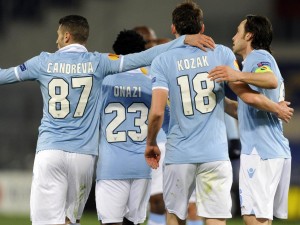
Then you have the blue of the sea or “azzure”, as in Inter Milan’s Nerazzuri

And finally, the word “Blu” is used for dark blue, as in Genoa’s Rossoblu. 

As if all this was not enough, they have Viola for purple!
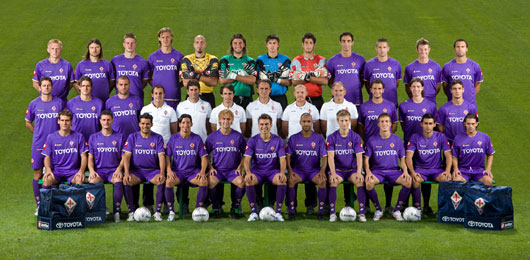
It is interesting how different languages use different levels of polymorphism for different things!

Countercyclical business

I realize being a freelance management consultant is countercyclical business. For two years in succession, I’ve had a light March – both years I’ve ended up finishing projects in Jan/Feb. With March being the end of the Indian financial year, most companies are loathe to commit additional spending in March, and it is a bad time to start new projects!

This is counter-cyclical because most other businesses end up having a bumper March, since they have end-of-year targets, and with a short sales cycle, they push their salespersons hard to achieve this target in March!

Narendra Modi should short the Nifty

The common discourse is that businesses like Gujarat chief minister Narendra Modi, and that India’s economic growth would get back on track if he were to become PM following the elections this summer. For example, this view was articulated well by my Takshashila colleague V Anantha Nageswaran in an Op-Ed he wrote for Mint last Tuesday, where he spoke of a “binary outlook for India” – either economic growth under Modi or further populism and stagnation under a Third Front.

Based on this view being the consensus, one can expect that the Indian stock market would go up significantly in case of a Narendra Modi victory, and would tank in case the Modi (and/or his party BJP) ends up doing badly. So what should Modi do?

He should short the stock markets, and fast. He needs money to run his campaigns, and he might be taking funds from friends and well-wishers, who expect some kind of payback in kind if/when Modi becomes PM. The question, however, is how he will pay them back in case he fails to become PM!

He will not have the power to pay back in kind. There is only so much he will be able to do as the Chief Minister of Gujarat. And given that he has got a lot of fair weather friends over the last couple of years, some of them might be disappointed that he didn’t become PM, and will ask for immediate payment. So how does Modi service these debts?

A part of his campaign budget should go into shorting the Nifty – perhaps by means of buying puts (with a May expiry – not sure they’re traded yet). This way, in case of his victory, he will end up losing his premium, but he will be able to pay back his creditors in kind, since he will be PM. In case he loses? The markets will tank anyway, and he will end up making a packet on these puts, which can then be used to pay back his current well=wishers!

Easy, no?

Depression and playing out the overs

There are two ways to bat – you can either seek to score runs or you can seek to play out the overs. Some puritan fans of Test cricket argue that the latter is the more important skill – that you are not a good Test player unless you can play out the overs when required. However, cricket matches are won only when you score more runs than the other team, and so while playing out the overs is important at certain times in the match, the value of run-scoring ability should not be ignored.

Sometimes, however, especially say when you are chasing a big fourth innings target on a nebulous wicket, you could decide to eschew any thoughts on run scoring and instead focus on hanging in there. You decide to devote all your energies to just “staying alive”, and just playing out the overs. In that sense, yes, playing out the overs without necessarily scoring runs can sometimes be a valid strategy.

However, you should notice that it remains a valid strategy only until the end of that particular Test match! Once the stumps are drawn at the end of the fifth day, with you hopefully still unbeaten and your team escaping with a draw, things are reset to zero! The next Test match is a whole new game, and you start off from zero, and you cannot afford to start that Test match batting the same way you did while you were trying to save the earlier match! You need to realize that you should include some run-scoring in your objective function, too!

Sometimes in life, when you are going through a tough phase for whatever reason, you might make a decision to “simply hang in there”. At these points in time, you don’t care whether you really achieve something in that time period – all you seek to do is to prevent further damage to yourself – this is similar to trying to play out the overs in a Test match.

I argue that this can be a viable strategy if and only if you decide to “play out the overs” until a fixed point in time! The difference between game and life is that game has a specified end-point. At four thirty on the final day, if you are still batting, the game is a draw, irrespective of whether you were one down or nine down! The next Test starts on a clean slate. This, however, doesn’t apply to life.

Life doesn’t have clear breakpoints like cricket does. And sometimes when you get yourself “nine down and far behind in terms of runs”, you find that you begin the “next Test match” (if you can divide life into discrete units called Test matches) at a disadvantage, and soon find yourself far behind and unable to cope.

Given that life doesn’t play out the same way as a game of cricket, you should use the strategy of “playing out the overs” only sparingly, and only when you see a clear “gamechanger moment” after which your equation is reset to zero! If you choose to overplay this strategy, however, not much good is going to come out of it.

So, what does depression have to do with all this? I’ve found depression to be a state of mind where you want to play out the overs even in situations where it is not the right thing to do (think, for example, of India’s third Test against the West Indies in Dominica in 2011). And soon you get into the state of mind of just playing out the overs that you lose all ambitions and hopes and desires for run-scoring. And soon you find yourself in a rut. And you decide to “play out” the rut by continuing to dig in. And that makes you sink deeper. It becomes harder to “play out” but now you know no other strategy, and soon get into a bad downward spiral.

If you find yourself “playing out the overs” way too often, it is an indication of trouble. It means that you are possibly exposing yourself to a downward spiral. And it is possible that you need help. The next time you get the desire of wanting to “play out the overs”, check if there is going to be an end to it, and implement the strategy if and only if you see a clear end.

Does facebook think my wife is my ex?

The “lookback” video feature that Facebook has launched on account of its tenth anniversary is nice. It flags up all the statuses and photos that you’ve uploaded that have been popular, and shows you how your life on facebook has been through the years.

My “lookback” video is weird, though, in that it contains content exclusively from my “past life”. There is absolutely no mention of the wife, despite us having been married for over three years now! And it is not like we’ve hidden our marriage from Facebook – we have a large number of photos and statuses in the recent past in which both of us have been mentioned.

Now, the danger with an exercise such as the lookback is that it can dig up unwanted things from one’s past. Let’s say you were seeing someone, the two of you together were all over Facebook and then you broke up. And then when you tried to clean up Facebook and get rid of the remnants of your past life, you miss cleaning up some stuff. And Facebook picks that up and puts that in you lookback video, making it rather unpleasant.

I’m sure the engineers at Facebook would have been aware of this problem, and hence would have come up with an algorithm to prevent such unpleasantness. Some bright engineer there would have come up with a filter such that ex-es are filtered out.

Now, back in January 2010, the (now) wife and I announced that we were in a relationship. Our respective profiles showed the names of the other person, and we proudly showed we were in a relationship. Then in August of the same year, the status changed to “Engaged’, and in November to “Married”. Through this time we we mentioned on each other’s profiles as each other’s significant others.

Then, a year or two back -I’m not sure when, exactly – the wife for some reason decided to remove the fact that she is married from facebook. I don’t think she changed her relationship status, but didn’t make the fact that she’s married public. As a consequence, my relationship status automatically changed from “Married to Priyanka Bharadwaj” to just “Married”.

So, I think facebook has this filter that if someone has once been your significant other, and is not that (according to your Facebook relationship status) anymore, he/she is an ex. And anyone who is your ex shall not appear in your lookback video – it doesn’t matter if you share status updates and photos after your “break up”.

Since Priyanka decided to hide the fact that she’s married from Facebook, facebook possibly thinks that we’ve broken up. The algorithm that created the lookback video would have ignored that we still upload pictures in which both of us are there – probably that algorithm thinks we’ve broken up but are still friends!

So – you have my lookback video which is almost exclusively about my past life (interestingly, most people who appear in the video are IIMB batchmates, and I joined Facebook two years after graduation), and contains nothing of my present!

Algorithms can be weird!

The Congress Party is a bubble

I think the congress party is a bubble. From what I’ve observed of the party in the last 10-15 years, they have no real ideology other than “loyalty to the Nehru-Gandhi family”. In other words, they have grown and flourished significantly without having any strong fundamentals. Which means they are in a bubble.

Let’s say you are a congressman and for whatever reason you were pissed off with Rahul Gandhi following his interview with Arnab Goswami on Monday. Now, because the uniting ideology in the party is “devotion to the family”, you cannot come out in criticism of the family or one of its members. If you do, you get hounded by other Congressmen, whose loyalty to the party is chiefly due to loyalty to the family.

Now, imagine a large number of congressmen think thus. If they had a way to communicate to each other about their displeasure with the family, they would come together and raise a no confidence motion against the party leadership. However, the problem is that no Congressman wants to let it be known in the party that he doesn’t like the family, for he can be accused of betrayal and removed from the party. Hence he keeps his thoughts to himself. That he keeps his thoughts to himself means that other congressmen who feel the same way also keep their similar thoughts to themselves, and the general discourse is that all congressmen are loyal to the family.

So why is “the family” is so powerful in the Congress? The answer is that the family is powerful because Congressmen think the family is powerful. A congressman thinks that his career in the party will be furthered if he is seen as being loyal to the family. So irrespective of his opinion, he puts up a facade of being loyal, and that increases the value of being loyal to the family!

A commodity is said to be in a bubble if its price is being driven up solely because other players in the market think that its price is going to be driven up, without the fundamentals being in favour of an increase in prices. You can think of “the family” of the Congress as one such commodity. Congressmen like to praise the family (i.e. go long the commodity) because they think everyone else in the Congress is doing the same, and thus the “price” is going to increase.  You can see the cycle of positive reinforcement that is at play here.

Like all bubbles, the Congress Party bubble is also bound to burst. And like other burst bubbles, this one is likely to end badly for the party – a split in the party cannot be ruled out in the period immediately after the bubble is burst.

The problem with bubbles, however, is that you don’t know when it will burst – anyone who can predict when a bubble can burst would be an extremely rich person. And you don’t want to be shorting a stock thinking the bubble might burst, only for the bubble to continue. And so you continue to dance, for the music is still playing.

Long mails

As you might have noticed from my blog posts over the years, I like writing long essays. By long, I mean blog post long. Somewhere of the length of 800-1000 words. I can’t write longer than that, because of which my attempts to write a book have come to nought.

Now, thanks to regular blogging for over nine years, I think I’ve become better at writing rather than speaking when I have to explain a complicated concept. Writing allows me to structure my thoughts better, whereas while speaking I sometimes tend to think ahead of what I’m talking, and end up making a mess of it (I had a major stammer when I was in school, by the way).

Given that I like explaining concepts in writing rather than in speech, I write long mails even when it comes to work. Writing long emails is like writing blog posts – you have the time and space to structure your thought well and present it to your readers. This especially helps if the thoughts you are to communicate are complex.

The problem, however, is that most people are not used to reading long emails in a work contexts. People prefer to do meetings instead. Or they just call you up. For whatever reason, the art of long emails has never really taken off in the corporate sphere, Maybe people just want to talk too much.

This, of course, has never deterred me from using my favourite means of communication. It didn’t stop me when I was an employee and the people I wrote to were colleagues. It still doesn’t stop me now, when I’m a consultant, writing to people who are paying me for a piece of work. If they are paying me, I should communicate things to them in a form they are most comfortable with, you might argue. If they are paying me, I should communicate things as well as I can, I argue back, and my best means of communication is writing long emails.

The problem with long emails, however, is that, like long-form articles you send to a Pocket or an Instapaper, you tend to bookmark these long mails for later, intending to read and digest them when you have the time. So, when you send a long email, you are unlikely to get a quick response (note that you can sometimes use it to your advantage). This means that when you write long mails, you might have to follow it up with an SMS or a phone call to the effect of “read and digest and let me know if you have any questions”.

In my last organization, I worked with a number of technical people, some of whom had PhDs. It was interesting to contrast the way they communicated with my long emails. They too would put complex thoughts in writing, except that they would use Latex and make a PDF out of it. It would be littered with equations and greek symbols, in a way that is extremely intuitive for an academic to read.

And here I was, eschewing all that Greek, preferring to write in plain text in the body of emails. No wonder some of my colleagues started terming my emails “blogposts”.

2 Jan

This post has nothing to do with the Indian Railways. Why would you think this has something with that? Because in its infinite wisdom the Railways has created a class of bogeys called “2 Jan Chair Car”! How did that materialize? Because a few years back they started this service called “Jan Shatabdi” which are all-seater trains with comfortable seating but no air conditioning. Essentially, a low-cost version of the Shatabdi. And they realized none of their existing bogeys fit this description, so they created a new class and called it “2 Jan Chair Car”.

So if not about the railways, what is it about? it is about the date 2nd January. The authorities at IIT Madras, I believe, have long known that students (most of them at least) don’t really have a social life, and not many of them are likely to celebrate new year in a big way (unless they are already on campus). Hence, every year the “even semester” would begin on 2nd January. The odd semester began at different times – sometimes in mid-July, sometimes in end-August. But the starting date of the even semester was fixed – 2nd January!

For people like me from nearby places such as Bangalore, it meant spending four consecutive New Years Days catching an overnight train. For people from farther away, especially closer to the north, it meant ushering in the new year on a train, for they had to start on the 31st (or earlier) to make it in time for classes on the 2nd.

Our “odd semester” results would have come out in the vacations and typically someone who had stayed back on campus would have had the responsibility of checking and informing everyone’s grades. On 2 Jan, we would go up to the notice boards and check our grades for ourselves. And occasionally we would go to professors who had taught us in the previous term seeking revaluation and a better grade. However, considering that final exam transcripts were “closed” (i.e. not available to the students) not much would come out of it.

Then we had this strange ritual called “registration” which we had to do every term. Administrative officials would be sitting in classrooms and we had to go fill up a form and sign on what courses we were going to take that semester. It was normally a pretty meaningless ritual, for we would have selected and been granted the courses the previous semester itself. But I suppose it served some administrative purpose.

The good thing about the start of the even semester was that this was the time of the year when Madras was at its coolest (relatively speaking, of course!). And then there would be Saarang (formerly Mardi Gras), the IIT Madras cultural festival to look forward to, and those that would be involved in organizing it (which I was in my latter two years at IIT) would spend pretty much all of January doing that.

Us people from Bangalore had another ritual – we would try and travel together to Chennai in the same train at the start of every semester. Sometime in the preceding holidays we would appoint a date when we would all meet at the Indian Railway booking counter in Jayanagar (most of us were from the south) and book tickets. Once, since we were booking in bulk, we were asked to fill a separate form. We had been asked what the purpose of our travel to Chennai was. We filled it as “pilgrimage”!

PS: some of you might have seen this blog post via Twitter. However, I’m taking a break from twitter (I’d gotten addicted, this is my version of a “quit smoking” new year resolution). So if you want to respond, please leave a comment here rather than replying on twitter.

Dictators and straightening dogs’ tails

There is this story from Hindu mythology I remember reading when I was a kid. I don’t remember the source but I remember the story really well. It basically goes like this.

A man wishes for a servant and gets one. The servant tells the master, “I’ll do anything you ask me to do. But I’ll serve you under one condition. If at any point in time I don’t have work, I’ll eat you up”. Given the amount of work the master has, he thinks this is a pretty good deal, and hires the servant.

The servant turns out to be super efficient. All the tasks the master gives are completed in a jiffy, and the master is hard-pressed to give more tasks, let he be eaten up. Finally the master pleads with the servant, that he has no more work to give, and that he will “free” him, and the servant to spare him.

The servant doesn’t agree. “This is not according to the terms of the contract”, he says, and threatens to eat up the master. Just then, the master sees this dog, with a crooked tail. The master tasks the servant with straightening out the dog’s tail. Legend goes that the servant is trying to straighten a dog’s tail until this day.

So why did I tell this story? Because I saw this tweet from former chess world champion Garry Kasparov, and found it pertinent.

A powerful and efficient dictator is like the servant in the above tale. Once he is done with “getting the trains to run on time”, he uses his power to come after you. And the only way you can prevent him from coming after you then is to give him some nonsensical work like straightening a dog’s tail.

Notice that the servant in the above story does only one job at a time. So once he started trying to straighten the dog’s tail (a task assigned to him so that the master survives), he wasn’t able to do any other task. In other words, he became useless!

So the moral of this story and Kasparov’s analogy is that a dictator, even if he works for you, will do so only for a short period of time.