Acceptable forms of help

I was reading this note by Kunal Bahl, CEO and co-founder of Snapdeal on the company’s turnaround after the failed acquisition by Flipkart last year. It’s a very interesting note – while I’ve never been a fan of the company (never considered buying from them), this story seems rather interesting, especially given the deep shit it was in a year ago.

What caught my eye is this little note about getting help from a small network of mentors. Bahl writes:

I was able to get the guidance and counsel from some of the most respected and leading business persons in the country. […] In our time of need, it was those who had the least to gain, and most to give, that came to our help. Not with money. But with their wisdom and encouragement. I recall sitting in the room with one of the above persons in August 2017, staring down the barrel with only months of money left in the bank. The gentleman, probably seeing how dire our situation was, picked up the phone and called six of the top business people in the country in quick succession explaining our situation to them – that we were good guys stuck in a bad situation – and requesting them to meet me to see if there were any synergies with their businesses[…]

(emphasis added)

What this got me thinking was about why it’s considered okay to give or take help in the form of intangibles, but not in terms of money. It’s rather common that people help each other out by way of providing advice, making introductions and sometimes just hearing them out. It’s not that common, though, that people help each other out with money.

To take a personal example, if someone asks to talk to me to get some advice, or asks for some connections, it’s very likely that I’ll help them out. On the other hand, if someone were to ask me for money I’ll start seeing them suspiciously.

One quick reason as to why intangibles is okay is that it is sometimes “cheap”. Making introductions doesn’t cost you much as long as you think it’s mutually beneficial for both parties (and in that, it seriously helps if you do double consent introductions – talk to both parties independently before introducing). Advice costs you maybe half an hour or an hour of your time, and if you feel like your time is being wasted, it’s not hard to cut losses. And the value that the recipient gets from this can far exceed the cost incurred by the “giver”.

Another reason is that intangibles are intangible – they’re hard to measure. And by that measure, you don’t rack up some sort of debt. If I take money from you, then what I owe you becomes precisely measurable. And until I repay you, things between us can be awkward. Introductions or advice, on the other hand, keep the value of the “debt” fuzzy, and in most case it gets “written off” any way, permitting the two parties to continue their relationship normally.

Anything else that I might have missed out?
Teacher abuse

Historically, it has been acceptable, indeed desirable, for the teacher to abuse students. Our epics are full of stories where the teacher plays elusive, challenging students to “prove themselves worthy” before being imparted learnings.

The most famous example, of course, comes from the Hindu myth story of Ekalavya who gave a finger to his non-teaching Guru Dronacharya. Elsewhere in the Mahabharata, we had Parashurama cursing his student Karna after discovering that the latter was not a Brahmin.

It is not just Hindu mythology that has such stories (just that I’m most familiar with this). In Quentin Tarantino’s Kill Bill, for example, Pai Mei abuses his pupils, making them carry water up the hill and serve him otherwise until he teaches them the five point exploding heart technique. He drives his students to such a rage that one of them (Elle Driver) ends up killing him.

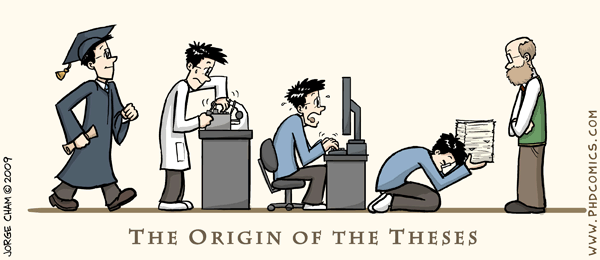
And this privileged attitude of the teacher (“acharya devo bhava“) extends to modern universities as well. It is common for advisors to endlessly push graduate students before they permit them to graduate, or to take credit for graduate students’ work (check out PhD comics.). In IIT Madras, where I did my undergrad, it is reportedly common for professors to endlessly flunk students who have pissed them off (I played it safe, so no first hand experience in this). Schoolteachers hand out corporal punishment, which is only recently making its exit from the classroom.

As part of my portfolio life over the last seven years, I’ve done several teaching jobs. I’ve taught at IIM Bangalore as an Adjunct Professor. I’ve conducted Data Journalism workshops for journalists and PR executives. I’ve done corporate training workshops.

In the initial days, I would sometimes act like a “typical teacher”, getting annoyed with students with this or that, or abusing my position of privilege in the classroom. Over time, though, I’ve come to see my students as clients – after all, they’re paying me (directly or indirectly) to teach them. And I’ve come to understand that they need to be treated like I treat my other clients – with respect.

If the fact that students are teachers’ clients is this intuitive, why is it that teachers everywhere (both in history and contemporarily) have found it acceptable to abuse students? Is it because teachers are sometimes able to hide behind the brands of sought-after schools and universities? Is it due to the concept of tenure, where professors are recruited for research prowess, and student feedback doesn’t really matter?

Or is it just a self-fulfilling prophecy? Once upon a time, teachers were scarce, and could hence put up their price, and chose to extract it not in cash but in other means. And so the image of “teacher is god” got formed, and perpetuated since most students decided to adhere to it (at least when the teacher is around). To add to this, over time we’ve created institutions such as university rankings which continue to push up artificial scarcity of teachers.

Do you have any idea on why teachers abuse their clients?

Speaking of yellow

Last night, we needed to distract the daughter from the play-doh she was playing with so that she could have dinner. So I set up a diversionary tactic by feeding her M&Ms while her mother hurriedly put away the play-doh.

Soon we figured we needed a diversionary tactic from the diversionary tactic, for the daughter wanted to continuously eat M&Ms rather than have dinner. I tried being the “bad dad” by just refusing to give her any more M&Ms but that didn’t work. So another diversion was set up where the put on TV, and in that little moment of distraction, I put away the yellow packet of M&Ms behind some boxes in its shelf.

Evidently, it wasn’t enough of a distraction, as the daughter quickly remembered the M&Ms and started asking for it. I told her it’s “gone” (a word she uses to describe my aunt who passed away recently), but she wouldn’t believe it. Soon she demanded to inspect the shelf by herself.

Her mother held her high, and she surveyed all three shelves in the cupboard. I hadn’t done a particularly great job of hiding the M&M packet, but thankfully she didn’t spot the yellow top of the packet from behind the masala box.

Instead, her eyes went up to the top shelf of the same cupboard where there was the only visible yellow thing – a bright yellow packet of coffee powder (from Electric Coffee). She demanded to inspect it.

Both of us told her it was coffee powder, but she simply wouldn’t listen. I opened the packet to make her smell it, and see the brown powder inside (we get our coffee ground at the shop since we don’t have a grinder at home, else it’s likely she might have mistaken a bean for a brown M&M). She still wasn’t convinced.

She put her hand right in and pulled out a tiny fistful of coffee powder, which she proceeded to ingest. Soon enough, she was making funny faces, though to her credit she ate all the coffee. It seems the high was enough to make her forget the M&Ms. And suddenly she started running around well-at-a-faster-rate. Fast enough to go bang her head to the wall a minute later – I suspect the caffeine had begun to act.

By the time she had finished crying and recovering from the head-bang, she was ready to belt curd-rice with lime pickle.

And if you want to ask, she fell asleep an hour later. Unlike us oldies, caffeine doesn’t seem to interfere with her sleep!

PS: The title of this post is a dedication to Sanjeev Naik, for reasons that cannot be described here.

Murray Gell-Mann Amnesia and the Vodnoy Paradox

I’ve written about the Murray Gell-Mann amnesia here before. The idea there is that you trust whatever is printed in the newspaper, except for the section which is your domain of expertise. And despite the newspaper falling short in this section, you read the rest of the newspaper as if everything there is “correct”.

Yesterday I came across a similar idea when it comes to big government – what University of Nebraska economist Arthur M Diamond calls as a “Vodnoy Paradox” after his optomerist – it’s basically about big government advocates who advocate big government in all fields except for the one they’re expert in.

Government regulations sound plausible in areas where we know little and have thought less. But usually those who know an area well can tell us of the unexpected harmful consequences of seemingly plausible and well-intentioned regulations. As a result, the same person often advocates government regulations in areas in which they are ignorant and opposes them in areas where they have knowledge. I call this the “Vodnoy Paradox.” 

In the field they’re expert in they know that regulation doesn’t work, or is misguided, yet they support regulation in all other fields. Isn’t this just Murray Gell-Mann Amnesia in a different context? (quote via David Henderson of Econlog)

Book challenge update

At the beginning of this year, I took a break from Twitter (which lasted three months), and set myself a target to read at least 50 books during the calendar year. As things stand now, the number stands at 28, and it’s unlikely that I’ll hit my target, unless I count Berry’s story books in the list.

While I’m not particularly worried about my target, what I am worried about is that the target has made me see books differently. For example, I’m now less liable to abandon books midway – the sunk cost fallacy means that I try harder to finish so that I can add to my annual count. Sometimes I literally flip through the pages of the book looking for interesting things, in an attempt to finish it one way or the other (I did this for Ray Dalio’s Principles and Randall Munroe’s What If, both of which I rated lowly).

Then, the target being in terms of number of books per year means that I get annoyed with long books. Like it’s been nearly a month since I started Jonathan Wilson’s Angels with dirty faces , but I’m still barely 30% of the way there – a figure I know because I’m reading it on my Kindle.

Even worse are large books that I struggle to finish. I spent about a month on Bill Bryson’s At Home, but it’s too verbose and badly written and so I gave it up halfway through. I don’t know if I should put this in my reading challenge. A similar story is with Siddhartha Mukherjee’s The Emperor of All Maladies – this morning, I put it down for maybe the fourth time (I bought it whenever it was first published) after failing to make progress – it’s simply too dry for someone not passionate about the subject.

Oh, and this has been the big insight from this reading challenge – that I read significantly faster on Kindle than I do on physical books. Firstly, it’s easier to carry around. Secondly, I can read in the dark since I got myself a Kindle Paperwhite last year. One of the times when I read from my kindle is in the evening when I’m putting Berry to sleep, and that means I need to read in the dark with a device that doesn’t produce so much light. Then, the ability to control font size and easy page turns means that I progress so much faster – even when I stop to highlight and make notes (a feature I miss dearly when reading physical books; searchable notes are a game changer).

I also find that when I’m reading on Kindle, it’s easier to “put fight” to get through a book that is difficult to read but is insightful. That’s how managed to get through Diana Eck’s India: A Sacred Geography, and that’s the reason I made it a point to buy Jordan Peterson’s book on Kindle – I knew it would be a tough read and I would never be able to get through it if I were to read the physical version.

Finally, the time taken to finish a book follows a bimodal distribution. I either finish off the book in a day or two, or I take a month to finish it. For example, I went to Copenhagen for a holiday in August, and found a copy of Michael Lewis’s The Big Short in my AirBnB. I was there for three days but finished off in that time. On the other hand, 12 rules for life took over a month.

Pertinent Observations Grows Up

Over the weekend, I read Ben Blatt’s Nabokov’s Favourite Word Is Mauve, a simple natural language processing based analysis of hundreds of popular authors and their books. In this, Blatt uses several measures of goodness or badness of writing, and then measures different authors by it.

So he finds, for example, that Danielle Steel opens a lot of her books by talking about the weather, or that Charles Dickens uses a lot of “anaphora” (anyone who remembers the opening of A Tale of Two Cities shouldn’t be surprised by that). He also talks about the use of simple word counts to detect authorship of unknown documents (a separate post will come on that soon).

As someone who has already written a book (albeit nonfiction), I found a lot of this rather interesting, and constantly found myself trying to evaluate myself on the metrics with which Blatt subjected the famous authors to. And one metric that I found especially interesting was the “Flesch-Kincaid grade level“, which is a measure of complexity of language in a work.

It is a fairly simple formula, based on a linear combination of the average number of words per sentence and the average number of syllables per word. The formula goes like this:

Flesch-Kincaid Grade Score

And the result of the formula tells the approximate school grade of a reader who will be able to understand your writing. As you see, it is not a complex formula, and the shorter your sentences and shorter your words (measured in syllables), the simpler your prose is supposed to be.

The simplest works by this metric as mentioned in Blatt’s book are the works of Dr. Seuss, such as The Cat in the Hat or Green Eggs and Spam, on account of the exclusive usage of a small set of words in both books (Dr Seuss wrote the latter as a challenge, not unlike the challenges we would pose each other during “class participation” in business school). These books have a negative grade score, technically indicating that even a nursery kid should be able to read them, but actually meaning they’re simply easy to read.

Since the Flesch Kincaid Grade Score is based on a simple set of parameters (word count, sentence count and syllable count), it was rather simple for me to implement that on the posts from this blog.

I downloaded an XML export of all posts (I took this dump some two or three weeks ago), and then used R, with the Tidytext package to analyse the posts. Word count was most straightforward, using the str_count function in the stringr package (part of the tidyverse). Sentence count was a bit more complicated – there were no ready algorithms. I instead just searched for “sentence enders” (., ?, !, etc. I know the use of . in abbreviations creates problems but I can live with that).

Syllable count was the hardest. Again, there are some packages but it’s incredibly hard to use. Finally after much searching, I came across some code that again approximates this and used it.

Now that the technical stuff is done with, let’s get to the content. This word count, sentence count and syllable count all flow into calculating the Flesch-Kincaid (FK) score, which is the approximate class that one needs to be in to understand the text. Let’s just plot the FK score for all my blog posts (a total of 2341 of them) against time. I’ve added a regression line for good effect.

The trend is pretty clear. Over time, this blog has become more complicated and harder to read. In fact, drawing this graph slightly differently gives another message. This time, instead of a regression line, I’ve drawn a curve showing the trend.

When I started writing in 2004, I was at a 5th standard level. This increased steadily for the first two years (I gained a lot of my steady readership in this time) to get to about 8th standard, and plateaued there for a bit. And then again around 2009-10 there was n increase, as my blog got up to the 10th standard level. It’s pretty much stayed there ever since, apart from a tiny bump up in the end of 2014.

I don’t know if this increase in “complexity” of my blog is a good or a bad thing. On the one hand, it shows growing up. On the other, it’s becoming tougher to read, which has probably coincided with a plateauing (or even a drop) in the readership as well.

Let me know what you think – if you prefer this “grown up style”, or if you want to go back to the more simple writing I started off with.

How markets work

A long time back, there was this picture that was making the rounds on Twitter and (more prominently) LinkedIn. It featured three boys of varying heights trying to look over a fence to see a ball game.

Here is what it looked like:

Source: http://www.freshshropshire.org.uk/about-us/equality-and-diversity/equality-of-opportunity/

These pictures were used to illustrate that equality of outcomes is not the equality of opportunity, or some such things, and to make a case for “justice”.

As it must be very clear, the allocation of blocks on the right is more efficient than the allocation of the blocks on the left – the tallest guy simply doesn’t need any blocks, while the shortest guy needs two.

And if you think about it, you don’t need any top-down “justice” to allocate the blocks in the right manner. All it takes is a bit of logical thinking and markets – and not even efficiently.

Think about how this scenario might play out at the ball park. The three boys go to see the ball game, and see three blocks at the fence. Each of them climbs a block, and we get the situation on the left.

Shortest boy realises he can’t see and starts crying. There are many ways in which this story can play out from here onward:

  1. Tallest boy realises that he doesn’t really need that extra block, and steps down and gives it to the shortest guy, giving the picture on the right.
  2. Tallest boy continues to stand on his block. Shortest boy realises that the tallest boy doesn’t need it, and requests him for the block. Assuming tallest boy likes him, he will give him the block.
  3. Tallest boy continues on the block. Shortest boy requests for it, but tallest boy refuses saying “this is my block why should I give it to you?”. Shortest boy negotiates. Tells tallest boy he’ll give him a chocolate or some such in return for the block. And gets the block.
  4. Tallest boy doesn’t want chocolate or anything else the shortest boy offers. In fact he might want to settle a score with the shortest boy and refuses to give the block. In this case, the shortest boy realises there is no point being there and not watching the ball game, and makes an exit. In some cases, the middle boy might negotiate with the tallest boy on his behalf, leading to the transfer of the block. In other situations, the shortest boy simply goes away.

Notice that in none of these situations (all of them reasonably “spontaneous”) does the picture on the left happen. In other words, it’s simply unrealistic. And you don’t need any top down notion of “justice” to enable the blocks to be distributed in a “fair” manner.

The problem with online media

… is that there is no ending. There is no sense of having “finished the newspaper”.

And there is no context. You see the homepage of a major newspaper, and you see a bunch of headlines leading to links. Occasionally there are section headers that tell you which broad section of the newspaper they come from (news/opinion), but that context is usually far inferior to what you see in print.

So addressing the issues one by one, the first “issue” with online media which no website (AFAIK) can solve is that online news is an online process (apologies for the pun) – as news comes in it needs to be displayed on the website, without really waiting for “editions”. This means there is a conflict between “importance” and “recency” – what kind of news do you show near the top and in bold? Stuff that came in latest or stuff that you think is important?

This means that you need a “live editor” (might be replaced by a bot very soon) all the time who takes a call on what comes on top. Yet, if I’m checking the news after a day, what might be “important” for me is very different from what might be important for you who is checking the news after half an hour. You most definitely want the latest stuff, while I possibly want to know everything that’s happened in the day. And a simple news website cannot cater to both.

The other problem is the lack of context and information before clicking through. In an offline newspaper, there is a large amount of information you have before you “click through” to an article. There is the page it appears on – if you are a regular reader of the paper, you know the kind of articles that appear on each page.

There is the author – you have most definitely built a model over time on which authors to not miss and whom to avoid. There is the length of the article. And there are articles that appear around it. And all these put together provide you enough information on whether it might be worth reading the content on an article.

Most of this is missing in online media, where you need to make your decision to read on headlines. Which can sometimes be click-baity and not all that informative. And so the chances of regret having clicked through to an article is high. Which means that you need some sort of external cues to make you want to click through and read an article.

And so you start consuming news through social media – articles that your friends recommend, with possibly some more information and context on what it’s about. This information and context would have in an offline world been given to you by the newspaper itself.

And so as you consume more and more news from social media, you have the usual problems of echo chambers, and not even glancing through the headlines of news you don’t like (notice how a traditional offline newspaper makes you go through most headlines, whether you like it or not!).

Finally, in an online newspaper there is no concept of having “finished” the paper, of having consumed all the news. As you keep consuming news, you find new pieces of information being thrown at you. Not knowing when to stop, you simply give up!

Networking events and positions of strength

This replicates some of the stuff I wrote in a recent blog post, but I put this on LinkedIn and wanted a copy here for posterity 

Having moved my consulting business to London earlier this year, I’ve had a problem with marketing. The basic problem is that while my network and brand is fairly strong in India, I’ve had to start from scratch in the UK.

The lack of branding has meant that I have often had to talk or negotiate from a position of weakness (check out my recent blog post on branding as creating a position of strength). The lack of network has meant that I try to go to networking events where I can meet people and try to improve my network. Except that the lack of branding means that I have to network from a position of weakness and hence not make an impact.

A few months back I came across this set of tweets by AngelList founder Naval Ravikant, in which he talked about productivity hacks.

One that caught my eye, which I try to practice but have not always been able to practice, is on not going to conferences if you are not speaking. However, now that I think about it from the point of view of branding and positions of strength, what he says makes total sense.

In conferences and networking events, there is usually a sort of unspoken hierarchy, where speakers are generally “superior” to those in the audience. This flows from the assumption that the audience has come to gather pearls of wisdom from the speakers. And this has an impact on the networking around the event – if you are speaking, people will start with the prior of your being a superior being, compared to you going as an audience member (especially if it is a paid event).

This is not a strict rule – when there are other people at the event who you know, it is possible that their introductions can elevate you even if you are not speaking. However, if you are at an event where you don’t know anyone else, you surely start on higher ground (no pun intended) in case you are speaking.

There is another advantage that speaking offers – you can use your speech itself to build your brand, which will be fresh in your counterparties’s minds in the networking immediately afterward. Audience members have no such brand-building ability, apart from the possibility of tarnishing their own brands through inappropriate or rambling questions.

So unless you see value in what the speaker(s) say, don’t go to conferences. Putting it another way, don’t go to conferences for networking alone, unless you are speaking. Extending this, don’t go to networking events unless you either know some of the other people who are coming there (whose links you can then tap) or if there is an opportunity for you to elevate your brand at the event (by speaking, for example).

PS: Some of Naval’s other points such as having “meeting days” and scheduling meetings for later in the day are pertinent as well, and I’ve found them to be incredibly useful.

Triangle marketing

This blog post is based more on how I have bought rather than how I have sold. The basic concept is that when you hear about a product or service from two or more independent sources, you are more likely to buy it.

The threshold varies by the kind of product you are looking at. When it is a low touch item like a book, two independent recommendations are enough. When it involves higher cost and has higher impact, like a phone, it might be five recommendations. For something life changing like a keto diet, it might be ten (I must mention I tried keto for half a day and gave up, not least because I figured I don’t really need it – I’m barely 3-4 kg overweight).

The important point to note is that the recommendations need to come from independent sources – if two people who you didn’t expect to have a similar taste in books were to recommend the same book, the second of these recommendations is likely to create an “aha moment” (ok I’m getting into consultant-speak now), and that is likely to drive a purchase (or at least trying a Kindle sample).

In some ways, exposure to the same product through independent sources is likely to create a feeling of a self-fulfilling prophecy. “Alice is also using this. Bob is also using this” will soon go into “everybody seems to be using it. I should also use it”.

So what does this mean to you if you are a seller? Basically you need to hit your target audience through various channels. I had mentioned in my post earlier this week about how branding creates a “position of strength“, and how direct sales is normally hard because it is done through a position of weakness.

The idea is that before you hit your audience with a direct sale, you need to “warm them up” with your brand, and you need to do this through various channels. Your brand needs to impact on your audience through multiple independent channels, so that it has become a self-fulfilling prophecy before you approach to make the sale.

What these precise channels are depends on your business and the product that you’re trying to sell, but the important thing is that they are independent. So for example, putting advertisements in various places won’t help since the target will treat all of them as coming from the same source.

Finally, where is the “triangle” in this marketing? It is in the idea that you complete the branding and sales by means of “triangulation”. You send out vectors in seemingly random directions trying to build your brand, and they will get reflected till a time when they intersect, or “triangulate”. Ok I know my maths here is messy ant not up to my usual standard, but I guess you know what I’m getting at!