The Johan Cruijff Derby

That’s the name I’m giving to my tour that starts tonight, and will last eighteen days. I’ll be spending 2-3 days in Amsterdam, after which I fly to Barcelona where I’ll spend two weeks (as you know, the wife lives there).

There are primarily two reasons I’ve given the tour this name. The first is Cruijff himself. Cruijff made his name as a footballer in the decade he played for Ajax, where Rinus Michels developed the Total Football paradigm (which incidentally is named after a “total architecture” paradigm that was popular in Holland in those days). After that he followed Michels to FC Barcelona, where he had another successful spell. While he didn’t play for Barcelona as long as he did for Ajax, he has continued to live in Barcelona. Hence, a short tour of Amsterdam followed by a much longer tour of Barcelona can be named after Johan Cruijff!

The other reason for nomenclature makes more sense – I have a ticket for a football match, to be played on the 21st of October. The ticket has set me back by more than ten thousand rupees, but it’s going to be my first stadium football experience (coming after nine years of football-watching, on TV), and so I’m quite excited. The game is at the Camp Nou, where FC Barcelona will be taking on – you guessed it – Ajax (in the UEFA Champions League). And if there is anything that deserves to be named after Cruijff, it is the game between Barcelona and Ajax!

If you’re in either of those parts and want to meet, do leave a comment. If you have any recommendations of dos and don’ts, let me know that also! I’ll keep this blog updated through the tour!

PS: I’ve downloaded Dr. Sid Lowe’s Fear and loathing in La Liga to read on my way to Barcelona – in flights, airports and all that!

Dear Brendan Rodgers

I’m beginning to write this at 64 minutes played in Basel-Liverpool. Basel is leading 1-0, not undeservedly. Liverpool have so far been extremely poor, and deserve to have gone behind. We started well in the first ten minutes, and it seemed like an eminently winnable game, but after the tactical substitution made by Paulo Sousa, we’ve never been in it. Some pertinent observations so far.

  • I understand our need to have wanted to buy a world class striker to replace Luis Suarez. One might have thought the purchase of Mario Balotelli, no doubt a world class striker, was vindicated when Sturridge got injured. But Balotelli just doesn’t suit Liverpool. He is too slow. He just doesn’t move.

    I don’t have the statistics (football statistics are extremely hard to come by, unlike cricket), but we need to look at the number of off sides conceded between last season and this one. Balotelli gives away too many of those. Most of them come about because of his slow movement

  • Raheem Sterling was due a poor game, and we are seeing one now. His touch has been poor all day today. In his defence, he was due one bad day. Except that you had no clue how to handle that.
  • Sousa saw the weakness in Liverpool’s left back zone with Jose Enrique, and thus decided to double up on his right wingers to attack that zone. Now, this ended up pushing Raheem Sterling back, and he has had more defending to do than what he thought would have been his share. That is understandable.

    But then you need to realise that when you double up on one zone, you end up weakening yourself in another. Basel have played almost the entire night without a left back, or anyone on their left side apart from their left winger Hamoudi. They are playing a very lopsided 3-4-3. And you have done nothing so far to exploit that. Markovic has played all evening, but hasn’t been leading attacks down that wing as would be optimal. Manquillo has been leading the attacks there, with Markovic drifting inside. What we needed was Manquillo and Markovic doubling down in that unguarded zone. Haven’t seen that at all.

  • Then there is the centre of midfield. The two of Gerrard and Henderson isn’t simply working. Even when playing out from the back, they have consistently been stopped at the halfway line. Ok there is Gerrard and Henderson, but they haven’t had a forward pass to play! Coutinho has been lost in the crowd. And Balotelli, unlike Suarez doesn’t come back to pick the ball there. So how do we go forward from there?
  • Liverpool simply haven’t been picking up the second balls in the middle of the pitch today. They’ve been thoroughly outnumbered in that area – with only Gerrard and Henderson against three central midfielders of Basel. When we demolished Tottenham last December, the key was in our picking up all these second balls and keeping attacks flowing. That’s been sorely missing all day today.
  • Lallana’s introduction was good, but it should have been Sterling who should have come off. He is evidently extremely tired, and nowhere close to his best. We can see that in the two clear chances he’s missed since I started writing this post.
  • Markovic shouldn’t start. He’s not enough of a lone ranger for that. With his pace you should look to him as a super-sub. A plan B to be introduced along with Balotelli and Lambert. I just don’t see him gelling with the rest of the team. And please – someone along with Gerrard and Henderson there. I know Allen and Can are injured, but even someone like Lallana along with Gerrard and Henderson would help. The World Cup showed us how those two together in a 4-2-3-1 are ineffectual. You haven’t learnt from that.
  • It’s been a scrappy game so far, but a great tactical battle. There was one big question that Sousa posed – by putting on Gonzales for Safari, but you have thoroughly failed to answer that. After two moves by Gonzales, you went into a shell, and didn’t attack enough in the newly posed gap. I’m absolutely disappointed with you for that. I expected you of all people to be more tactically sound.
  • The best formation Liverpool has played with the available players this season was in the second half against Everton. With Gerrard-Henderson-Lallana-Coutinho-(not out of form)Sterling-Balotelli. You never even tried that in this game, while I expected you to start that way.
  • The game has ended as I finish this post. We have lost. Deservedly.
  • Maybe a you could use the services of a statistical analyst to help you figure out the gaps in play and how Liverpool should structure themselves given the available players. You can leave me a comment if you think you need one (you surely do!), and I’ll come over to help!

Derivatives trading in football players

I love it! It’s a dream come true!! It’s official!!!

Football clubs have finally wisened up to trading in derivatives on players’ contracts, it is apparent based on the transfer deadline news of yesterday. Alvaro Negredo has been loaned out by Manchester City to Valencia, but at the end of the year Valencia have an obligation to make the deal permanent. The same article mentions Fiorentina taking Micah Richards on loan, also from Manchester City. In this case, however, Fiorentina has the option to make the deal permanent after a year.

In fact, thinking about it, this kind of option trading in football contracts is not all that new. When Brendan Rodgers was initially appointed by Liverpool in 2012, he was given a three year deal, with the club having an option of extending it by a year (the deal has since been revised).

It’s all very interesting. I’ve constantly lamented that some of the great concepts in finance which are well applicable to everyday life are not applied to the extent that is required. Option valuation is one such concept, for example. I wrote to a friend just now asking why I should join a club he is exhorting me to join, given it’s not doing much now. His reply can be condensed to “option value”.

Option valuation is not the only thing. There is the concept of liquidity. A very commonly used concept within financial markets, it is surprisingly absent in general economic literature. For example, in finance it is a well understood concept that the more the number of active market participants the less is the transaction cost (measured as the bid-ask spread). The same concept can be used to analyze markets for taxis, housing, cooks (why a cook costs much more in Rajajinagar where demand is much lower than in Jayanagar), etc. You never see too many economists talking about it, though.

The problem might be that practitioners of financial economics concepts find finance too lucrative to apply their concepts elsewhere, while mainstream or left-leaning economists might find finance (especially complex derivative finance) abhorrent, and thus are loathe to borrow concepts from that (generally speculating)!

In terms of liquidity, though, things seem to be changing. My old friend Sangeet has been practically making a living over the last couple of years evangelizing the concept of liquidity, through his excellent blog on platform economics. Check out his recent post on Uber, for example. Platform economics is nothing but the economics of liquidity. The success of Sangeet’s blog shows that people are finally beginning to take the concept seriously. Still not mainstream economists, though!

Levels of polymorphism

Different languages have different levels of polymorphism, and it is a function of the environment in which the language developed. I discovered this last night when someone wrote on twitter that there is no word in Tamil for snow:

That got me thinking as to whether Kannada has a word for snow. Thinking of words for all the super-rain things in Kannada, I figured that “hima” is the word for fog, and “manju” means mist. But there is no word for snow in Kannada!

I put up the question on twitter, and the answers again were variations of the list I’ve put up earlier – some suggested “hima”, others “hani” (means “drops”, as in “raindrops”). One suggested “tushaara” for snow, but it’s not a commonly used word, so while it might be valid, I was looking for more commonly used words.

It then dawned on me that like the Tamil country, “solid rain” (apart from hailstones – which has its own Kannada word Anekal – translates to “elephant stone”) is not all that common in the Kannada country too. Yes, the Kannada country is cooler than Tamil country, and “solid rain” does happen, but it doesn’t happen on a regular enough basis for each type to have a word of its own. So, while I might think that “hima” is fog (since that’s the context in which it’s used in Bangalore), it also stands for “snow”! It’s all solid rain, and since it’s not all that common, you can have one word that describes it all! Interestingly, I can’t think of a Kannada word for “ice” also (again I haven’t learnt Kannada formally, though I speak the language at home. So what i know is the everyday spoken language)!

On a different note, in Japanese, the same word “Ao” is used to describe both blue and green! I’m again not sure if this because Japanese people are blue-green colour-blind, but the level of polymorphism in colour is interesting. At the other end of the scale, Italian has at least three words to describe different shades of blue (my knowledge of Italy, and Italian, I must mention, is mostly from football).

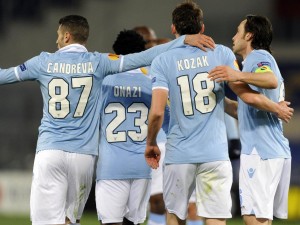
First, you have “celesti” or sky blue, as in the Biancocelesti of Lazio:

Then you have the blue of the sea or “azzure”, as in Inter Milan’s Nerazzuri. 

And finally, the word “Blu” is used for dark blue, as in Genoa’s Rossoblu. 

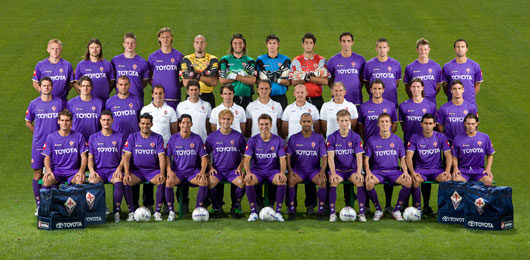
As if all this was not enough, they have Viola for purple!

It is interesting how different languages use different levels of polymorphism for different things!

Depression and playing out the overs

There are two ways to bat – you can either seek to score runs or you can seek to play out the overs. Some puritan fans of Test cricket argue that the latter is the more important skill – that you are not a good Test player unless you can play out the overs when required. However, cricket matches are won only when you score more runs than the other team, and so while playing out the overs is important at certain times in the match, the value of run-scoring ability should not be ignored.

Sometimes, however, especially say when you are chasing a big fourth innings target on a nebulous wicket, you could decide to eschew any thoughts on run scoring and instead focus on hanging in there. You decide to devote all your energies to just “staying alive”, and just playing out the overs. In that sense, yes, playing out the overs without necessarily scoring runs can sometimes be a valid strategy.

However, you should notice that it remains a valid strategy only until the end of that particular Test match! Once the stumps are drawn at the end of the fifth day, with you hopefully still unbeaten and your team escaping with a draw, things are reset to zero! The next Test match is a whole new game, and you start off from zero, and you cannot afford to start that Test match batting the same way you did while you were trying to save the earlier match! You need to realize that you should include some run-scoring in your objective function, too!

Sometimes in life, when you are going through a tough phase for whatever reason, you might make a decision to “simply hang in there”. At these points in time, you don’t care whether you really achieve something in that time period – all you seek to do is to prevent further damage to yourself – this is similar to trying to play out the overs in a Test match.

I argue that this can be a viable strategy if and only if you decide to “play out the overs” until a fixed point in time! The difference between game and life is that game has a specified end-point. At four thirty on the final day, if you are still batting, the game is a draw, irrespective of whether you were one down or nine down! The next Test starts on a clean slate. This, however, doesn’t apply to life.

Life doesn’t have clear breakpoints like cricket does. And sometimes when you get yourself “nine down and far behind in terms of runs”, you find that you begin the “next Test match” (if you can divide life into discrete units called Test matches) at a disadvantage, and soon find yourself far behind and unable to cope.

Given that life doesn’t play out the same way as a game of cricket, you should use the strategy of “playing out the overs” only sparingly, and only when you see a clear “gamechanger moment” after which your equation is reset to zero! If you choose to overplay this strategy, however, not much good is going to come out of it.

So, what does depression have to do with all this? I’ve found depression to be a state of mind where you want to play out the overs even in situations where it is not the right thing to do (think, for example, of India’s third Test against the West Indies in Dominica in 2011). And soon you get into the state of mind of just playing out the overs that you lose all ambitions and hopes and desires for run-scoring. And soon you find yourself in a rut. And you decide to “play out” the rut by continuing to dig in. And that makes you sink deeper. It becomes harder to “play out” but now you know no other strategy, and soon get into a bad downward spiral.

If you find yourself “playing out the overs” way too often, it is an indication of trouble. It means that you are possibly exposing yourself to a downward spiral. And it is possible that you need help. The next time you get the desire of wanting to “play out the overs”, check if there is going to be an end to it, and implement the strategy if and only if you see a clear end.

Liverpool FC, this season

For a Liverpool fan, this has easily been the best footballing season since 2008-09. Based on the performance so far, however, I would still rate the 2008-09 performance higher – primarily because Liverpool came back to win several games that season – something they’ve not managed this season. Here are some pertinent observations from the season so far:

  • Aly Cissokho is the new Djimi Traore (for those who don’t remember, he was Liverpool’s left back in the Champions League winning team in 2005. He’s been branded as ‘the worst player ever to win the Champions League’. Among other things he played Crespo onside twice for Milan’s second and third goals in that game)
  • Liverpool against Aston Villa two weekends back reminded me of Liverpool versus Milan in 2005. Back then, Rafa Benitez had dropped holding midfielder Dietmar Hamann and played Xabi Alonso and Steven Gerrard as central midfielders, and they got badly overrun.

    Here, Brendan Rodgers went with a midfield of Jordan Henderson (the new Gerrard, more on that later) and Gerrard (now a wannabe Alonso), and they got similarly overrun. The only time Liverpool looked threatening was when Lucas Leiva was on the pitch for 20 minutes of the second half

  • When Kenny Dalglish bought Henderson in 2011, it seemed like the Liverpool team had too many “Gerrards”. There was Gerrard himself, there was Alberto Aquilani (remember?) and there was Raul Meireles (yet another player in the traditional “Gerrard role”) when Henderson came in. And Jonjo Shelvey was coming up the ranks.

    Two and a half years hence, Henderson has established himself as the Number One Gerrard, ahead of Gerrard himself, who now plays more like the 4 he wears for his country than the 8 he wears for his club. Meireles and Aquilani were sold soon after Henderson arrived, Shelvey went last season (a mistake IMHO. He should’ve been loaned out) and Gerrard has moved back.

  • With Liverpool gifting West Brom a goal after not playing out properly from the back, one of the two monkeys on Liverpool’s back has bitten.  Simon Mignolet is nowhere as good as Pepe Reina as a distributor (though he’s much much better as a shot stopper), and the Toure-Skrtel partnership has always looked vulnerable playing out from the back. This was bound to happen and it’s good it happened. They’ll be more careful playing out from the back henceforth.
  • The other monkey on Liverpool’s back waiting to bite is Skrtel at set pieces. His natural strategy this season has been to grab the opponent’s tallest player. So far referees have overlooked it, and a penalty is waiting to be conceded. Hope that happens such that Liverpool don’t drop points on account of it
  • A big issue with Aly Cissokho at left back is that when he ventures forward (typically with little success), he doesn’t track back quickly enough and leaves Liverpool short of support in case the opponent breaks on a counterattack. Hence in the game against West Brom it was pleasing to see Daniel Sturridge having moved back into a left back position to cover when Cissokho got isolated on one of his ventures forward.
  • Once Jon Flanagan is fit enough to last 90 minutes (he isn’t yet, it seems), Cissokho should be dropped, Flanagan should go to left back and Kelly should play at right back. Cissokho is an abomination.
  • Liverpool’s injury list currently reads: Right back: Glen Johnson, Centre backs: Mamadou Sakho and Daniel Agger, Left back: Jose Enrique, Holding midfield: Lucas Leiva.  Another central midfielder Joe Allen recently came off that list. Gerrard, Sturridge and Coutinho have also been injured at some point in time this season.
  • The most joyous thing about watching Liverpool in 2008-09 was their comebacks. They came back from a goal down to beat Manchester United 2-1 at Old Trafford (I still remember that Ryan Babel strike that settled that game). Then came back from 2-0 down to beat Manchester City 3-2, and repeated that effort against Wigan. They almost repeated it against Hull but could only draw 2-2. Apart from the Villa game, such comebacks have been absent this season. And Liverpool have let leads slip way too many times.
  • I’m not saying anything about the Suarez-Sturridge partnership up front – the results are there to see. One thing I’ll say, though, is that I don’t like the “SAS” acronym – simply because the “A” stands for “and”. Now if only Iago Aspas could magically improve next season and become the A in SAS..
  • I have this tracker going all season that tries to predict where Liverpool will end up. This is based on quality of opposition faced. Liverpool have been a consistent fifth according to this tracker. Look at the MS Score here.

Volleyball

It’s been over eight years since I last played the game, but if I were to pick one outdoor game in which I’m best at (relative to other games I’ve played) it’s volleyball. And when I say I’m best at that, it’s on a strict relative basis – in undergrad, I struggled to get into my hostel team (let alone college team). It just goes to show how bad I’ve been in other outdoor games! I’m a successful cricket and football-watcher, though!

The thing with volleyball is that my game runs counter to how i play other games, and my life in general. In general, I’m an extremely high-risk person – I’m not into adventure sports, though, but have a Royal Enfield motorcycle – I take chances where possible and go for the spectacular. It is hard for me to be “accurate” and “correct”, and given that I know that I’m prone to making mistakes I try to maximize the outputs from the times when I don’t make mistakes, and thus go on a high risk path.

So I’ve quit my job without something else in hand four times, now freelance as a management consultant, blog about every damn thing – things that have promises of big upsides, but also risks of downsides. It also reflects in how I sometimes talk to people – I sometimes try too hard to make an impression – which can potentially get me big returns, but end up saying something stupid at times, and end up sounding arrogant at other times. Those are risks I willingly take.

And this risky nature has reflected in most games I’ve played, also – again nothing in the recent past. In chess, I get bored of slow technical Carlsen-esque positions, and am prone to go on Morphy-esque attacks that can backfire spectacularly. Playing bridge, I finesse way more than I’m supposed to – making some otherwise unmakeable contracts, but going down in contracts I should have otherwise made.

Back in school, when we played cricket with rubber and tennis balls, I would bowl leg spin, and using a light bat, would try to hit every ball for four or six, rather than trying to bat steadily. And while playing basketball (my “second best” outdoor game, after volleyball) I have a propensity to go for long shots.

What sets volleyball apart is that my game completely runs counter to who I am. In volleyball I’m a solid player – don’t spike too much (can’t jump!!), but can set spikes well, block well and can lead a team well from the back line. In fact, my best volleyball games have been those when the team has had to carry some weak links, and I’ve led from the centre of the back line, lending solidity and helping build up attacks. It definitely doesn’t reflect what I’m like otherwise.

But volleyball has also been the game where I’ve had a large number of spectacular failures. At every level I’ve played, I’ve had some responsibility thrust upon me, and I’ve buckled under the pressure. It’s volleyball that comes to mind every time I let down people’s trust because I do badly a something I’m supposed to be good at.

1. Voyagers versus pioneers, 1999: This was the school inter-house tournament. We go two sets up. They win the next two. Down to the decider. We lead 14-13, and its our turn to serve. Our captain purposely messes up our rotation such that I can serve (I had a big serve – one attacking aspect of my volleyball). The serve clips the net on its way across (back then, a let was a foul serve in volleyball). We lose.

2. NPS Indiranagar versus NPS Rajajinagar, 1999: Then I get selected to represent my school. I’m on the bench, and am subbed in right on time to serve. I decide to warm up with an underarm serve (before I start unleashing my overarm thunders). Hit it into the net. Opponent’s serve comes to me and I receive it badly. Get subbed out.

3. G block versus F block, 2004-05: Semi finals of the IIMB inter-hostel championship. We have two big spikers, two decent lifters and defenders (including me) and two who had never played volleyball in their lives, but were chosen on the basis of their physical fitness alone. Down to third set (best of three). We lead 25-24 (new scoring system). I’m playing right forward. Ball comes across the net. All I need to do is to set it up for a big spike, but I decide to spike it directly myself. And miss. Then I serve on the next match point. Decide to go for a safe serve, gets returned. We lose.

4. Section C versus Section A, 2004-05: Again similar story. I don’t remember the specifics of this, but again it was heartbreak, and I think I missed my serve on match point.

I guess you get the drift..
The Problem With American Sport

There was a basketball epidemic when I was in high school. It was probably a result of two things – we used to play basketball regularly in school, and Star Sports (or was it still Prime Sports?) had started showing live games from the NBA. Everyone in school would talk about basketball. Your knowledge of basketball went beyond the Magic Johnsons and Michael Jordans. You learnt about teams with wonderful names such as “Utah Jazz”. And for reasons completely unknown to me, despite having never watched him play (I still haven’t) Patrick Ewing became my favourite player.

So one morning I decided to see what the fuss about NBA was all about, and watch a game. It made for horrible viewing. There were great plays, of course. It was a great spectator sport in that sense. But what annoyed me endlessly were the time outs and consequent advertising breaks. Just when I would get settled into the rhythm of the game, someone would call a time out and for the mid 90s, two minutes of advertising was a really long time!

I still continued to watch, for “pseud value”, so that I could talk about it in school. However, I could never get the kind of engagement that I could get with cricket (then) or football (now). The game was simply way too discontinuous. A game of basketball is supposed to last 40 minutes, but these things would last three times as long. I don’t think I watched more than 2-3 games.

As everyone on my facebook timeline talks about the Super Bowl, the only thing I can think of is how unwatchable American Sport is. I understand that you need the ads to fund the game, and that greater advertising revenue means greater revenue for players and hence greater quality of sport. What irks me however, is that these ads end up causing much discontinuity in the sport.

So this morning I was thinking about why I get irked so much about ads in American sports (basketball, american football, etc.) while I can still watch cricket, which has a fair share of ads. The answer lies in randomness. I know when a cricket telecast will switch to ads – at the end of every over, at the fall of a wicket, or in an innings break. When an advertisement comes in a cricket broadcast, I’m prepared for it (except of course, when greedy broadcasters cut to ads before the full over is bowled). It is a similar case in tennis, where I expect to switch to advertisements after every two games – there is a rhythm to it.

In American sport, it is not so. That teams can call for a timeout at any point in time, and that can completely put you off. The game cuts to advertisements at moments when you least expect it, and that can be a huge challenge for someone not used to it!

A year or so ago, I had attended this lecture on sports analytics in Bangalore, delivered by a University of Chicago professor. He said that the reason football hasn’t taken off in the US is because it is not television friendly. “Split a game into four quarters, introduce two time outs in each quarter, and you will see Major League Soccer taking off”, he said. The problem, however, is that this would simply ruin the continuity of the game – which is what a lot of people love about football. And looking at the funding of the clubs in the major European leagues, it is clear that football is making sufficient money from television in its current form, without any gimmickry.

An American colleague at my last job offered another perspective. “How can you watch a game continuously for 45 minutes”, he asked. “We are so used to breaks in play every few minutes that we can’t watch continuously for so long”. If I can extrapolate from this one data point and take it with conjunction with what the professor said, you know why football is not popular in the US.

When I woke up this morning I wanted to check if the Super Bowl was being telecast in India. Then I remembered my earlier experiences of trying to watch American football, and decided against it. It is too discrete a game for my liking. There are too many breaks in play. I’d any day watch rugby instead! It is a similar game but so much more elegant and continuous!

Why I became a Liverpool fan

In mid-April 2005, I was on the District Line train from Mansion House to South Kensington, in London, and in the Victoria station, a huge number of people got on to the train. They were all dressed in red, and carrying Liverpool scarves and cans of Carlsberg beer. They were on their way to Stamford Bridge, to watch Liverpool take on Chelski in the Champions League semis at Stamford Bridge. And they started singing. 

It was magical, as they first sang “you never walk alone”, and then followed it up with personalized songs for each of the players, and for the coach Rafa Benitez. I remember one going “Steve Gerrard Gerrard, pass the ball forty yards .. ” . And another, to the tune of “La Bamba”, going “Rarararararafa Benitez, Xabi Alonso, Garcia and Nunez” (honouring all the Spaniards in the team). I was sold.
Till then, I hadn’t been much of a football fan, though I would watch the odd World Cup or Euro game. I had never really followed club football, and never supported any team. That day, things changed. I went to a crowded pub in Kensington to watch the game, perhaps I was the only Red fan there. I got to know the names of the Liverpool players (I’d heard of Gerrard and Milan Baros thanks to their exploits in Euro ’04, and I knew Alonso, Garcia and Nunez (never saw him play) thanks to the song). And quietly cheered for Liverpool in that semi final.
It has been a roller coaster ride for the last eight odd years, with more downs than ups. The undoubted high came just a month after I’d declared myself a Liverpool fan, when they came back from 0-3 down to beat Milan in the Champions League finals in Istanbul. There have been several low points, the one that hurts the most is them failing to win the Premiership in 2008-09, when they came a close second. And then, they were to sell Xabi Alonso, who had been my favourite player.
The kind of passion I feel when I watch Liverpool play is unmatched, even by what I feel when I watch the Indian Test cricket team. There is a kind of tension that develops that I seldom feel otherwise. The disappointment when they lose (or fail to win) is the kind that I normally reserve for personal debacles.
And to think it all started with a random train ride with a bunch of loud drunks.